









Converting your basement into a living space not only raise value of your property, but also significantly increases the quality of your life, and one way to transform your basement is by lowering the basement floor. So, whether you’re looking to create a comfortable living space, add a legal basement suite, or just boost your property’s resale value, understanding basement lowering in Toronto starts with getting your hands on the know-how of the process and understanding local rules. In this guide, we’ll take a closer look at basement lowering and how it’s done, needed permits and its benefits.
Start Your Project with Confidence
At Land Signal, we assist with construction and renovation permits, as well as Garden House and Laneway Suite designs. Let our experts guide you through every step.
What’s Basement Lowering?
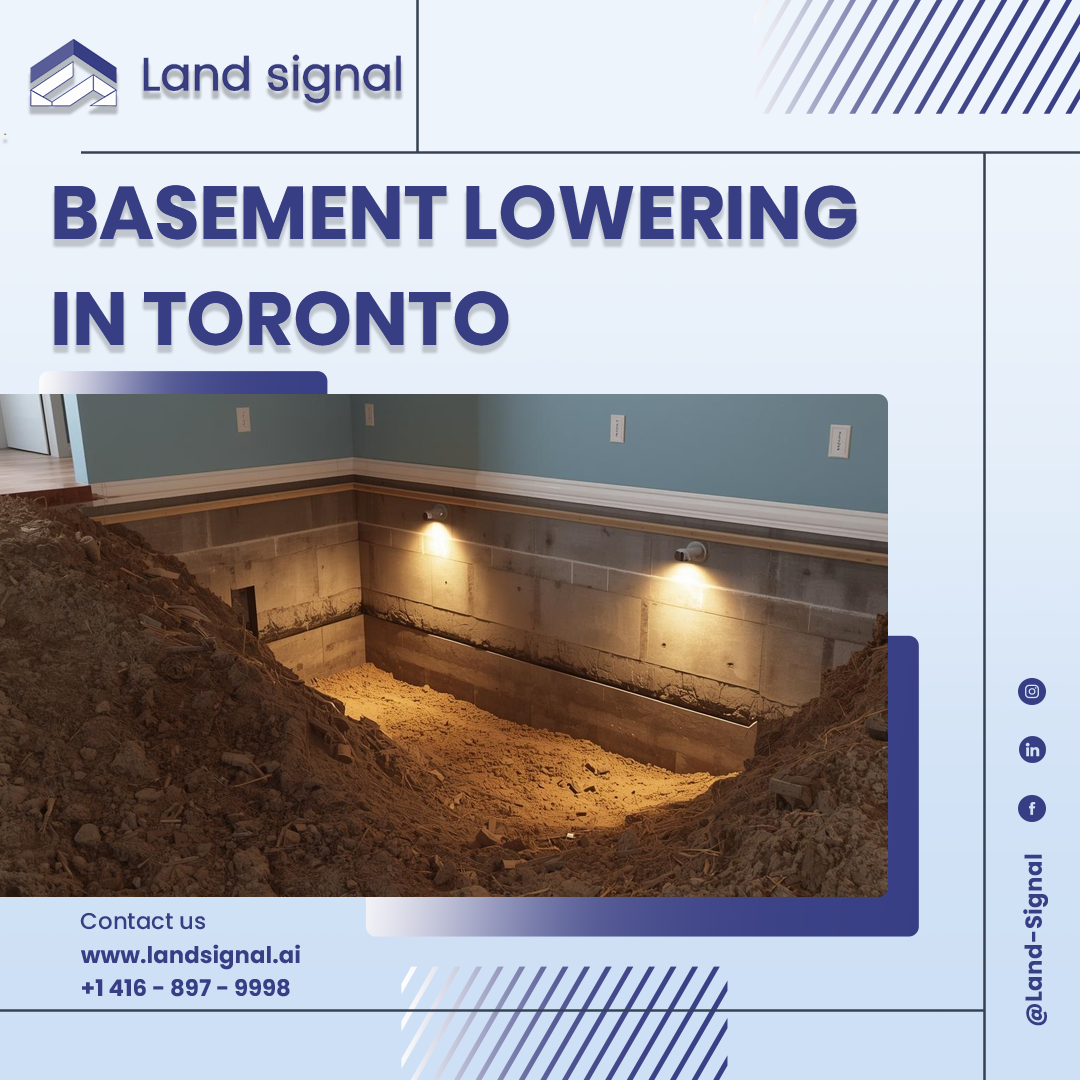
Basement lowering is a process in which you add space to your basement by digging deeper instead of going upward or outward. Ceiling height is increased by excavating soil beneath an existing foundation. This approach is usually taken when the ceiling height is under modern standards or when homeowners want to convert the basement into a functional living space. This process typically involves:
- Removing existing basement flooring
- Excavating soil to a new depth
- Reinforcing or extending the foundation
- Pouring a new concrete slab at a lower level
Do You Need a Permit for Basement Lowering in Toronto?
Yes. Since the work affects the structural integrity of the house, the city tightly regulates it. If you skip permits, you might get stop-work orders, fines or problems when you try to sell the property. The permits typically needed for basement lowering in Toronto include:
- Toronto’s Building Permit Application process
- Schedule 1: Designer Information Form as used by Toronto and for Underpinning you need to hire Professional Engineer to handle the job.
- Mandatory P.Eng.-stamped underpinning drawings for basement lowering, Also Peng need to measure adjacent neighbor basement deeps to check angle of repose to make sure these changes will not affect neighbor’s houses.
- Assumption of Responsibility and Commitment to General Review forms
- Tree Declaration Form under Toronto’s private tree bylaws
- Toronto-specific inspection stages and sequencing
- Review through Toronto Building
Read More: Renovation Permit Toronto
Methods of Basement Lowering
The two main methods for basement lowering are underpinning and benching.
Underpinning
Underpinning means making the foundations stronger and extending them downwards. The soil is taken out in stages, and new concrete footings are poured below the original foundation level.
Common reasons to choose underpinning:
- Maximizes ceiling height
- Maintains full basement width
- Suitable for future rental units
This method is more expensive and time-consuming, but it offers the best long-term results.
Benching
Benching lowers the basement floor, but leaves a concrete “bench” or ledge along the interior perimeter walls. This avoids disturbing the foundation itself. Also if you are living on a Semidetached or town house you can not underpinning shared wall unless otherwise you have consent of your neighbor.in Such cases you can use Bench on shared wall and underpinning for other walls.
Why homeowners choose benching:
- Lower cost than underpinning
- Shorter construction timeline
- Less structural risk
The trade-off is reduced floor space, which may affect layout and future use.
Basement Underpinning Costs in Toronto
Basement underpinning in Toronto is a major structural investment, with costs shaped by engineering requirements, site conditions, and project scope. While some pricing is calculated per linear foot, the total cost reflects multiple interconnected factors.
- Typical cost range: $800–$1,500 per linear foot, with total project costs commonly ranging from $50,000 to $200,000+ for a full basement
- Foundation and excavation factors: Existing foundation type and condition, along with the depth required to achieve legal ceiling height, significantly affect labor and structural complexity
- Structural and material requirements: The number of underpinning segments, reinforcement needs, and quality of concrete and steel used influence durability and overall pricing
- Site and regulatory considerations: Soil conditions, access limitations, underground utilities, engineering reports, and City of Toronto permit fees can add time and cost
- Additional budget considerations: Post-underpinning finishing work and contingency allowances are essential to account for unforeseen excavation challenges
Read Also : Basement Construction Cost Calculator in Ontario
Benefits of Basement Lowering in Toronto
If it’s done right, lowering the basement can really boost the liveability and property value. In Toronto’s competitive housing market, adding square footage below grade can be a great way to make money, as long as you plan it properly and make sure it’s up to code.
Key benefits include:
- Increased ceiling height and natural light
- Creation of usable living space
- Potential for legal basement apartments
- Improved resale appeal
- Better long-term functionality of older homes
How Land Signal Helps Homeowners With Basement Lowering in Toronto
Land Signal helps homeowners, investors, and renovators plan basement lowering projects in Toronto by clarifying feasibility, permits, and cost considerations early in the process. Our team assists with:
- Zoning and permit guidance for basement lowering, underpinning, and benching projects
- Coordination of structural engineering and architectural drawings required for City of Toronto approvals
- Early feasibility insights to help determine whether underpinning or benching is the right approach
- Cost planning support such using tools like our construction cost estimator to help homeowners budget accurately or for costs of basement underpinning you can use Basement Construction Cost Calculator
Whether you’re lowering your basement to create livable space, prepare for a legal rental unit, or improve long-term property value, Land Signal helps you understand requirements, anticipate challenges, and move forward with confidence before construction begins.
Conclusion
Basement lowering in Toronto is a big project, but it can turn an underused space into a really useful part of your home. I believe it’s pretty obvious that there are plenty of advantages to a well-planned and properly permitted project, from better ceiling height to increased property value. Basically, whether or not you succeed depends on picking the right method, understanding what the city requirements are, and getting ready for the structural complexity involved.
Sources
- City of Toronto. (n.d.). Residential Underpinning (Including Basement Entrances) — Building Permit Guide. Official municipal guidance on permit requirements and application steps for underpinning and related basement work. Retrieved from https://www.toronto.ca/services-payments/building-construction/building-permit/before-you-apply-for-a-building-permit/building-permit-application-guides/small-residential-project-guides/residential-underpinning-including-basement-entrances/
- D-Themes. (2025). 4 Methods of Lowering a Basement Floor in Toronto: What Homeowners Need to Know. Outlines common approaches to lowering basement floors, practical considerations, and cost factors for Toronto homes. Retrieved from https://d-themes.com/4-methods-of-lowering-a-basement-floor-in-toronto-what-homeowners-need-to-know/
- Aquatech Waterproofing. (n.d.). Lowering a Basement Floor. Discusses basement floor lowering techniques, moisture barriers, and structural considerations for renovation projects. Retrieved from https://aquatechwaterproofing.ca/lowering-a-basement-floor/
- Aquamaster Plumbing. (n.d.). Guide to Basement Underpinning in Toronto, Ontario. Provides a homeowner-focused overview of underpinning and basement foundation work, including when it’s needed and how it’s done. Retrieved from https://www.aquamasterplumbing.com/post/guide-to-basement-underpinning-in-toronto-ontario/
- NuSite Group. (n.d.). Benefits of Lowering a Basement in Toronto Through Underpinning. Highlights how underpinning and floor lowering can increase ceiling height, improve livable space, and add value to a basement renovation. Retrieved from https://nusitegroup.com/benefits-lowering-basement-toronto-underpinning/
FAQ
Ceiling height: The Ontario Building Code requires a minimum ceiling height of 6 feet 5 inches (1.95 meters).
Yes, in most cases. Contractors typically seal off the basement to contain dust and use specialized equipment to vent exhaust fumes outdoors. However, expect noise, vibrations, and temporary utility interruptions.
Beyond wanting more height, you should consider it if you notice large horizontal or vertical cracks in foundation walls, uneven or significantly sloping floors on the main level, and doors or windows that frequently stick or no longer close properly.