









What if you had a cozy house in your backyard that felt big and inviting when you stepped in? That’s what we call a laneway suite. Now imagine if you added a compact living space to your property without increasing building height or overwhelming your lot. If that image looks appealing, single level laneway suites are worth a closer look. A single-storey approach is a more subtle alternative to taller builds while still delivering functional, independent living space.
Before going further, it’s worth understanding what single level laneway suites are, how they differ from other backyard housing options, and why they often appeal to homeowners dealing with garden suite rules and laneway regulations in Toronto
Start Your Project with Confidence
At Land Signal, we assist with construction and renovation permits, as well as Garden House and Laneway Suite designs. Let our experts guide you through every step.
What are Single Level Laneway Suites?
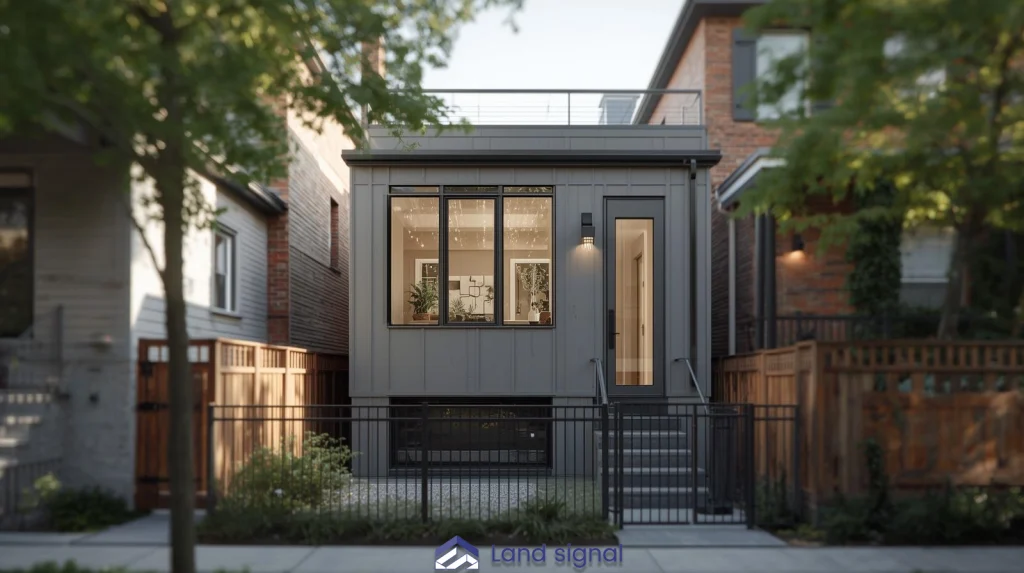
Single level laneway suites are like detached residential units, but they’re built at the back of a property and accessed from a public laneway. These suites are built on one floor, so there are no internal stairs or upper levels, unlike multi-storey designs. They’re basically fully self-contained, with a kitchen, bathroom, living area, and bedroom, plus a private entrance.
Key Characteristics of Single Level Laneway Suites
The main reason to build single level laneway suites is comfort, so everything that makes them distinct revolves around that.
- Accessibility-Oriented Design: The lack of stairs makes these suites more accessible. Step-free entrances and single-floor layouts are especially great for older residents or long-term planning.
- Standalone Functionality: Most single level laneway suites are designed to function independently, with their own heating systems and utility connections where needed. This makes them great for renting out or for families to live in.
- Thoughtful Space Planning: Everything is on one floor, so the layouts focus on open living areas and easy movement around the house. When it comes to well-executed laneway suite design projects in Toronto, smart storage solutions and flexible room layouts are pretty much par for the course.
- Lower Visual Impact: The building’s single storey keeps it from being too bold. This helps to keep neighbouring properties private and makes it easier to comply with zoning and setback requirements.
If you’re planning to add extra space, you can’t go wrong with a laneway suite in Toronto.
Accessibility
With no stairs to worry about, single level laneway suites are much more accessible. Single-floor layouts reduce the risk of falls and make daily movement easier for seniors, individuals with mobility challenges, or families with young children.
Easier Maintenance
Maintaining a single-storey home is generally less demanding, both inside and out. You can clean, rearrange furniture or handle minor repairs without having to deal with stairs, which makes things so much easier. Things like window cleaning and regular maintenance are also easier when everything’s close by, so they’re less physically demanding.
Energy Efficiency
Heating and cooling one floor is usually better than trying to heat and cool several. The space keeps a steady temperature, so there’s less heat loss and fewer fluctuations to deal with. This can make you more comfortable all year round and help you to use energy more efficiently, especially in compact, well-insulated layouts.
Open Floor Plan Potential
Single level laneway suites are great for open-concept designs. If you don’t have staircases or upper-floor separations, the layout can flow more naturally from one area to the next. Open floor plans help you make the most of natural light, create a greater sense of space, and make even smaller suites feel bright, functional and easy to live in.
Read Also: Laneway Suites in Toronto: A Smart Housing Option for Aging Parents
How Land Signal Helps Homeowners Build Single Level Laneway Suites in Toronto
Land Signal helps homeowners plan single level laneway suite projects in Toronto by clarifying zoning rules, design limitations, and permit requirements early in the process. Our team supports these projects by providing:
- Zoning and permit guidance specific to laneway suites and single-storey designs
- Early feasibility insights related to lot conditions, setbacks, servicing, and access from the laneway
- Support with permit documentation for laneway suite approvals and related applications
- Cost planning assistance using tools like our construction cost estimator to help homeowners budget realistically
Whether you’re building a single level laneway suite for accessibility, rental income, or long-term flexibility, Land Signal helps you understand what’s allowed and plan your project with confidence before construction begins.
Read Also: Comprehensive Guide to Second Floor Addition Toronto
Conclusion
Single level laneway suites are a great way to address Toronto’s changing housing needs. They’re small, easy to set up and they comply with local rules, so they’re a great choice for homeowners who want a bit more space without getting bogged down.
I think even though they’re smaller than multi-storey buildings, if you get the design and planning right, they can be really comfortable and practical. For a lot of property owners, picking a single level laneway suite is more about smart, future-focused design than about size.
Sources
- (2025). Advantages of Single Floor Home Design. Discusses the benefits of single-level homes, including accessibility, ease of movement, and cost-effective construction. Retrieved from https://www.bricknbolt.com/blogs-and-articles/advantages-of-single-floor-home-design
- Epcon Communities. (n.d.). Benefits of Single-Level Living: Why Home Designs Without Stairs Work for You. Highlights lifestyle and practical advantages of single-level homes, particularly for aging in place and long-term comfort. Retrieved from https://www.epconcommunities.com/epcon-insights/lifestyle/benefits-of-singlelevel-living-why-home-designs-without-stairs-work-for-you
- City of Toronto. (n.d.). Changing Lanes: Laneway Suites in Toronto. Official overview of the city’s planning initiatives around laneway housing, including policy context and goals. Retrieved from https://www.toronto.ca/city-government/planning-development/planning-studies-initiatives/changing-lanes-laneway-suites-in-toronto/
- City of Toronto. (n.d.). New Laneway Suite — Building Permit Application Guide. Official municipal guidance on permit requirements, application steps, and considerations specifically for new laneway suite construction. Retrieved from https://www.toronto.ca/services-payments/building-construction/building-permit/before-you-apply-for-a-building-permit/building-permit-application-guides/renovation-and-new-house-guides/new-laneway-suite/
FAQ
Yes, basements are generally permitted in laneway suites. However, the expense of excavation, shoring, and drainage in a confined rear yard can significantly increase the project budget. A finished basement can provide extra living or storage space, as suites cannot be subdivided into multiple units.
Yes, a properly executed laneway suite typically increases both the equity value of the property and its potential for income generation (e.g., as a rental unit or home office space).
Laneway suites are primarily intended as residences and can be used for short-term rentals if the homeowner principally occupies the main residence. Check local bylaws for specific regulations on short-term rentals in your municipality.
All municipal services (water, gas, electricity) must be supplied from the main house’s connections. While electrical service can often be separately metered, gas and water services will share a meter with the main residence, though options are available for sub-metering usage.