









Garden suites have quickly become a popular way for Toronto homeowners to use their backyards. They offer flexibility, rental potential, and a way to add density without altering the neighborhood. Garden suites are allowed in many areas, so they seem simple on paper.
The reality is more complicated. Most garden suite projects that face delays or refusals do not fail because of construction issues. They fail because of regulatory misunderstandings. Zoning misinterpretations, premature design decisions, and incomplete permit submissions are common and costly.
This matters because garden suites involve multiple layers of municipal and provincial regulation. A single misstep can trigger redesigns, extended review cycles, or loss of approval altogether.
This guide breaks down the most common garden suite mistakes seen in Toronto and explains how to avoid them through compliance-focused planning.
Start Your Project with Confidence
At Land Signal, we assist with construction and renovation permits, as well as Garden House and Laneway Suite designs. Let our experts guide you through every step.
Understanding Garden Suites in Toronto
A garden suite is a separate building for living in the backyard of a property. It is separate from the main house. It is different from laneway suites and other secondary units, even though these housing types are often grouped together.
In Toronto, garden suites are governed by zoning permissions, site-specific conditions, and the Ontario Building Code. Approval is not automatic. Each property must meet defined eligibility criteria, and each proposal is reviewed on its own merits by the City.
Misunderstanding this legal context is the starting point for many project failures.
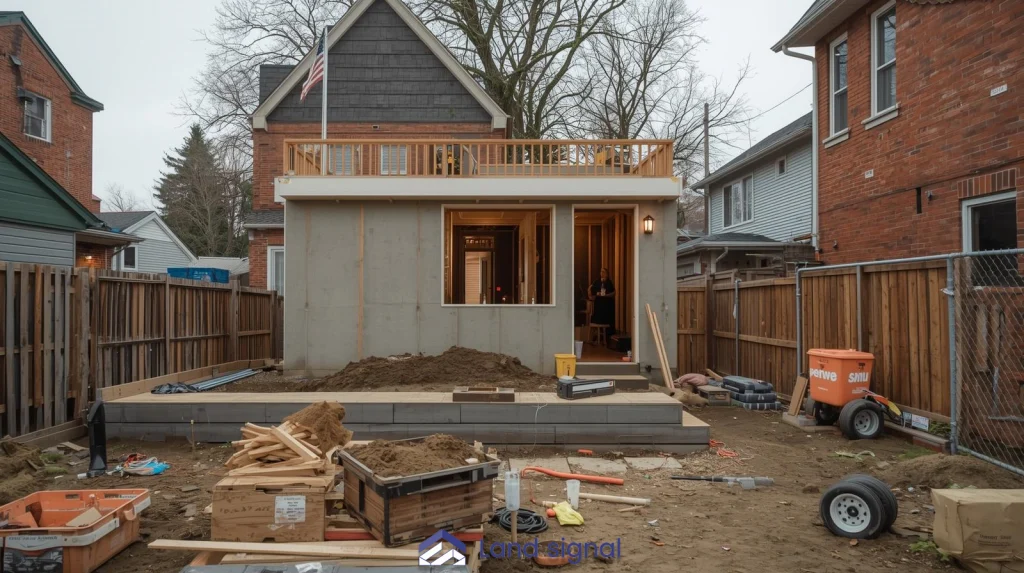
Garden unit add consider limited access specially for excavation which some times need to be done with small exacting machines or even by hand. Delivery of large and heavy items like lumbers which need to be done manually or appliances which need to be moved manually
Common Garden Suite Mistakes in Toronto
Most garden suite problems arise long before construction begins. The following mistakes reflect recurring issues encountered during zoning reviews, permit applications, and inspections across Toronto.
Mistake 1: Confusing Garden Suites With Other Secondary Units
One of the most common errors is assuming garden suites follow the same rules as laneway suites or basement apartments. While these housing types are related, they are regulated differently.
Garden suites are tied to rear-yard conditions, lot configuration, and separation distances. Submitting a proposal using the wrong regulatory assumptions often leads to immediate zoning comments or refusal.
Correct classification at the outset is essential.
Mistake 2: Skipping a Detailed Zoning Review
Many homeowners proceed with design before confirming whether their property meets garden suite zoning requirements. This often results in designs that cannot be approved without variances.
Key zoning considerations include lot size, lot coverage, soft landscaping, and access requirements. These rules are enforced under the City’s zoning framework and are not flexible by default.
A zoning review should always precede architectural design.
Mistake 3: Designing Before Understanding Size, Height, and Setbacks
Garden suite designs frequently exceed allowable building envelopes. Height limits, rear yard setbacks, and side yard clearances are among the most common compliance issues.
Even small deviations can require redesign or trigger additional review cycles. In some cases, a project may need a Committee of Adjustment application, significantly extending timelines.
Designing within the permitted envelope from the start reduces risk and cost.
Mistake 4: Assuming Servicing and Utilities Are Simple
Utility connections are one of the most underestimated aspects of garden suite projects. Water, sanitary, storm, and electrical servicing must be carefully coordinated with the existing dwelling.
Capacity limitations, connection routing, and metering arrangements can all affect feasibility and cost. These constraints are often discovered after design is complete, leading to revisions and delays.
Early servicing analysis helps avoid unpleasant surprises.
Mistake 5: Ignoring Tree Protection and Site Constraints
Trees are a major approval constraint for garden suites in Toronto. Both private and City-owned trees are protected, and Tree Protection Zones can significantly limit buildable area.
Failure to account for trees often results in redesign or additional reports. In some cases, tree conflicts alone can make a proposed layout unbuildable.
Tree review should be integrated into site planning from the beginning.
Mistake 6: Submitting an Incomplete Permit Application
Garden suite permit applications are frequently delayed due to missing or inconsistent documentation. Common issues include unclear zoning interpretation, incomplete drawings, or uncoordinated consultant submissions.
Each review cycle adds time and uncertainty. In Toronto, incomplete applications can stall for months before substantive feedback is provided by the City of Toronto.
A coordinated and complete submission is critical.
Mistake 7: Treating Inspections and Occupancy as a Formality
Approval does not end once a building permit is issued. Garden suites must pass multiple inspections and meet occupancy requirements before they can be legally used.
Inspection failures often relate to fire separation, exiting, or servicing details that were not properly coordinated during design. These issues can delay occupancy and trigger costly corrections.
Planning for inspections early reduces downstream disruption.
How to Avoid These Mistakes Altogether
Most mistakes in garden suites can be avoided by following the rules. Successful projects have a few things in common.
They start by looking at the best places to build and whether the site is feasible. They consider building codes early in the process. They combine design, servicing, and permitting into one process, instead of doing them one at a time.
Most importantly, they see clear rules as the foundation of the project, not just a formality.
Read Also: Garden suite Builder Toronto
How Land Signal Helps You building your Garden Suite
Garden suite approvals become complicated when zoning rules, building code requirements, and permit documentation are not aligned. Many homeowners only discover compliance issues after design work is complete or permits are under review.
Land Signal supports homeowners by:
- Reviewing properties for garden suite zoning eligibility
- Identifying regulatory constraints before design begins
- Flagging approval risks tied to setbacks, trees, or servicing
- Supporting permit planning across Toronto and Ontario
By addressing compliance early, garden suite projects move through approvals more efficiently and avoid costly redesigns.
Conclusion
Garden suite projects in Toronto rarely fail because of construction problems. They fail because of mistakes made early in the process. It is essential to understand zoning rules, building code requirements, servicing constraints, and permit procedures to deliver a project that follows the rules and is completed on time.
In Toronto, it’s becoming harder to get approval for renovations and infill projects. Garden suites are no exception. As housing policies change and people pay more attention to them, it’s no longer enough to just follow the rules. Property owners who make regulatory alignment a priority from the start are better able to avoid delays and protect the flexibility of their land in the long term.
Sources
- City of Toronto. (2026). Garden Suites: Zoning and Permit Requirements. Official guidance on eligibility, zoning standards, and approval process for garden suites in Toronto. Retrieved from https://www.toronto.ca
- Government of Ontario. (2026). Ontario Building Code. Provincial regulations governing construction standards, fire safety, exiting, and habitability for residential buildings, including garden suites. Retrieved from https://www.ontario.ca
- City of Toronto. (2026). Zoning By-law 569-2013. Legal zoning framework regulating setbacks, height, lot coverage, and permitted residential uses across Toronto. Retrieved from https://www.toronto.ca
FAQ
No. Eligibility depends on zoning, lot configuration, servicing, and site constraints such as trees. Each property must be reviewed individually.
Yes. Skipping a zoning review is one of the most common causes of redesign and permit delay.
Incomplete or inconsistent permit submissions, often caused by misaligned zoning interpretation or missing documentation.
Timelines vary, but projects with clear zoning compliance and complete submissions move significantly faster than those requiring revisions.