










If you look at your basement and see untapped potential, you might be thinking of basement renovation, and if you’re thinking of basement renovation you’ve definitely seen two terms going around: basement underpinning and benching.
The end goal of both is to add extra height to your basement, so what’s the difference between basement underpinning vs benching in Toronto? What benefits or downsides might they bring? And how should you choose between them? These are the questions we’ll be answering in this blog.
Start Your Project with Confidence
At Land Signal, we assist with construction and renovation permits, as well as Garden House and Laneway Suite designs. Let our experts guide you through every step.
What Is Basement Underpinning?
Basement underpinning is similar to Residential Underpinning, a process that involves lowering the foundation of your home to create more ceiling height and strengthen the structure. The builders dig up parts of the ground beneath the current foundation and pour new concrete footings at a deeper level. This process is done in stages to make sure the house doesn’t start to fall apart.
Read Also: Basement Lowering (Underpinning) in Toronto
Pros of Basement Underpinning
- Maximizes usable space: Since the foundation is extended downward, you get a full basement footprint without losing floor space.
- Increases property value: A higher, more functional basement can significantly improve resale value.
- Strengthens the foundation: Underpinning reinforces older foundations and can improve structural stability.
- Allows for full basement finishing: It creates enough height for legal rental units or additional living space.
Cons of Basement Underpinning
- Higher cost: Underpinning is usually more expensive because it involves structural work and engineering requirements.
- Longer project timeline: The staged excavation and concrete work can take several weeks or months.
- Requires permits and engineering approval: Toronto building regulations are strict for structural modifications.
What Is Basement Benching?
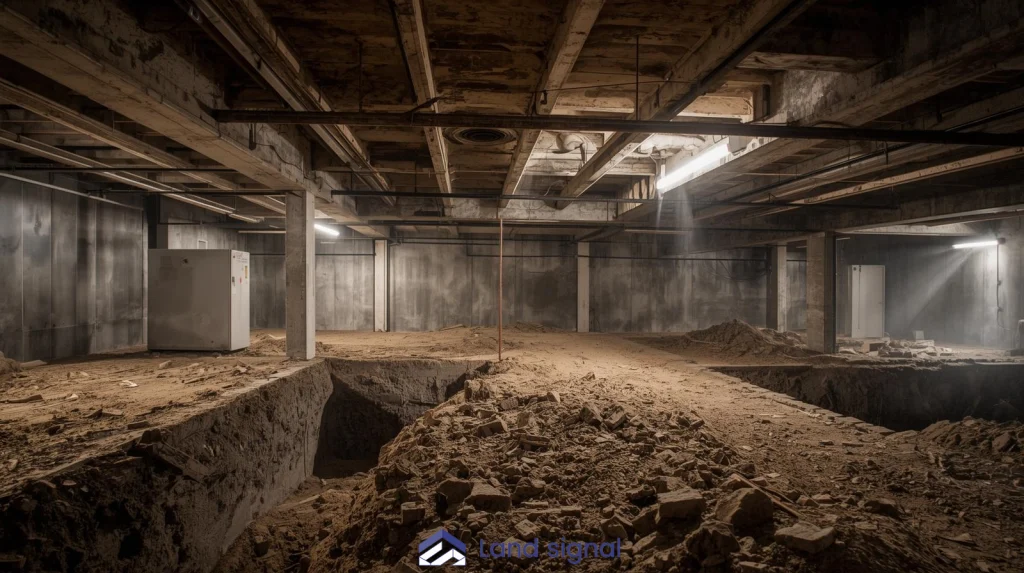
Another way to increase basement height without digging is to use basement benching, also called bench-footing. Contractors dig out the basement floor bit by bit while making sure the original foundation stays in place. A concrete bench or ledge is built along the inside edge of the basement to support the structure.
Read Also: Requirements for Obtaining a Legal Basement Permit Toronto and Ontario
Pros of Basement Benching
- Lower cost compared to underpinning: Benching usually requires less structural work, which makes it more affordable.
- Faster installation: Since the original foundation is not altered, the process is often quicker.
- Reduced structural risk: The existing foundation remains untouched, which can simplify engineering requirements.
Cons of Basement Benching
- Reduces usable floor space: The concrete bench takes up room along the walls.
- Limited design flexibility: The bench can restrict furniture placement and interior layouts.
- May affect aesthetics: Some homeowners find the bench visually intrusive if not incorporated into the design properly.
How to Choose Between Basement Underpinning and Benching
The choice between underpinning and benching depends on your renovation goals, budget, and long-term plans for the property.
If you want to create more living space or build a basement apartment that is legal, underpinning is often the better choice. You can use the whole basement and be more flexible with how you design and finish it. It also tends to make property more valuable.
If you don’t have much money or just want a bit more flexibility without having to make big changes, benching could be the answer. While it does take up floor space, it can still make the basement more comfortable and useful for storage, recreation, or as a separate living space.
You should also think about the building regulations in Toronto. You usually need a permit for both of these, as well as professional engineering and inspections. It’s very important to work with experienced contractors who understand local building codes. This is because it’s important for safety and compliance.
sometime you need to use mix of these methods.
On Semi- detached houses you are not allowed to do underpinning under shared party wall unless otherwise if you have formal permission by adjacent property. Incase if you have a problem to get that approval you can use bench method instead.
Another matter for underpinning should consider Distance from neighbours property and Engineer should check it shall be out of Angle of repose of neighbour footing or need to be designed with rebars.
Land Signal: Supporting Basement Underpinning and Benching Projects in Toronto
Land Signal helps Toronto homeowners navigate the permit and approval process for basement underpinning and benching projects. Whether you’re lowering your foundation to create a legal rental unit or expanding usable space with bench-footing, our team ensures your project meets all structural and municipal requirements. We assist with:
- Building permit applications for basement underpinning and benching projects
- Zoning and bylaw compliance reviews to meet Toronto building regulations
- Structural drawing coordination and engineering approvals
- Committee of Adjustment and variance applications when required
- Clear guidance through inspections and final approvals to avoid costly delays
Whether you’re planning a full basement transformation or simply increasing ceiling height, Land Signal helps make the approval process organized, compliant, and stress free.
Final Thoughts
Basement underpinning and benching are both effective ways to increase basement height in Toronto homes, but they serve different needs. I believe the right choice depends on your budget, renovation goals, and how you plan to use the space. Consulting with structural professionals and experienced contractors can help you make a confident and informed decision, so get in touch with Land Signal today and consult with our professional team for free.
FAQ
Underpinning provides maximum height without losing floor space, but it costs more and is more complicated. Benching is cheaper and faster, but it makes less space available along the basement wall. What you choose depends on how much money you have, how strong the foundations are, what the soil is like, and whether your neighbour agrees to share walls.
Yes, it is possible to lower a basement floor without underpinning. This is often done through a method called benching. But this method doesn’t make the foundation any deeper, and it can even reduce the amount of usable interior space.
How long the foundation needs to be underpinned depends on how it is done, how big the foundation is, and what the soil is like. On average, it can take a few days to a couple of weeks to complete foundation underpinning.
Sources
- Benching vs. Underpinning: What’s the Difference?
Manpower Demolition — Explains the difference between benching and underpinning in foundation work, including when each method is used.
https://manpowerdemolition.ca/benching-vs-underpinning/ - Basement Underpinning vs. Bench Footing
Revival Construction — Comparison of basement underpinning and bench footings, with insights on structural application and benefits.
https://revivalconstruction.ca/basement-underpinning-vs-bench-footing/ - Bench Footing vs. Underpinning: Solving Structural Challenges for Toronto Homeowners
NuSite Group — Overview for homeowners comparing bench footing and underpinning options for foundation issues.
https://nusitegroup.com/bench-footing-vs-underpinning-solving-structural-challenges-for-toronto-homeowners/ - Basement Underpinning vs. Benching
Penguin Basement — A guide comparing basement underpinning and benching techniques, including use cases and considerations.
https://penguinbasement.ca/2024/03/13/basement-underpinning-vs-benching/