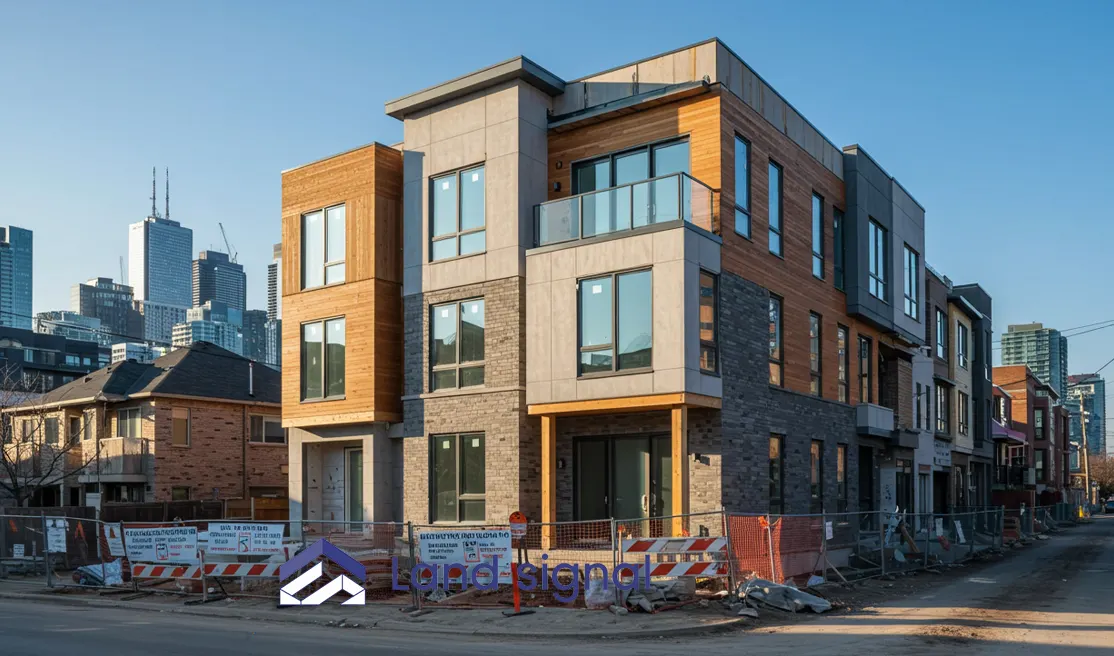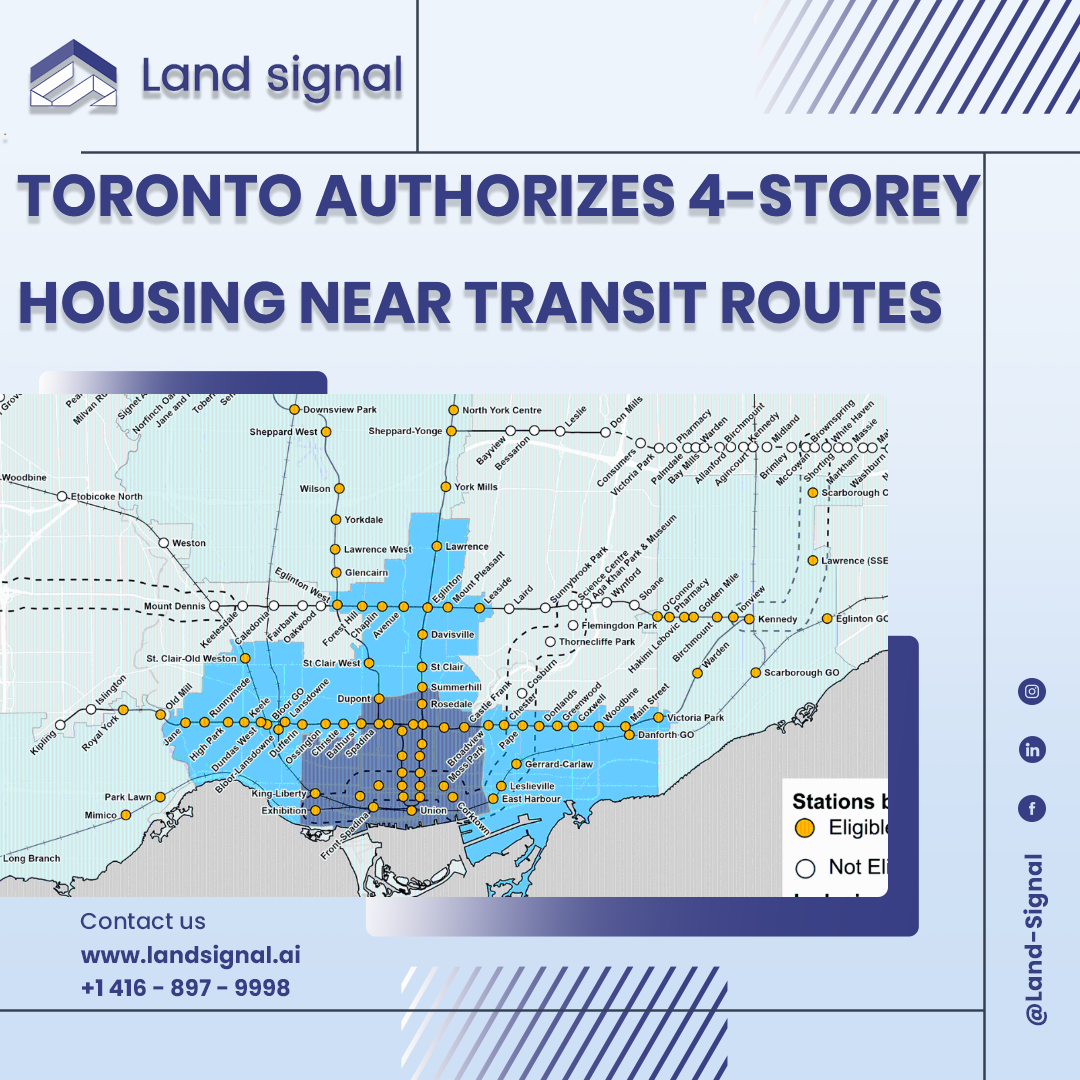











Toronto’s urban growth strategy is changing, and at the heart of it lies the city’s Major Transit Station Areas (MTSAs). These are the lands surrounding key subway, LRT, and GO stations, where higher-density, mixed-use development is encouraged to support sustainable, transit-oriented communities.
If you own property or plan to apply for a home building permit in Toronto, laneway suite, or multiplex permit, understanding MTSA zoning and its implications could open significant opportunities. As per MTSA zoning by-law you can built up to 4 stories without approval of Committee Of Adjustment within 500 m from major transit.
This guide breaks down MTSA policy interpretation, explains how it affects zoning permissions, and offers practical insights for developers, investors, and homeowners planning upgrades or new builds.
What Are Major Transit Station Areas
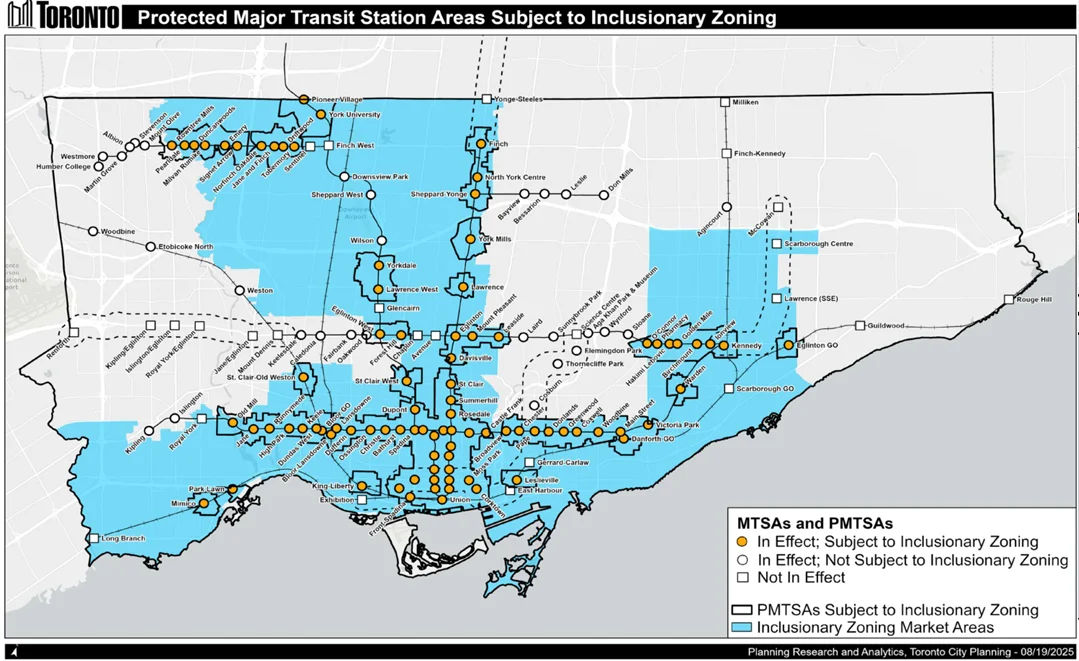
Major Transit Station Areas (MTSAs) are designated zones around transit stations, typically within a 500-metre radius, or about a 10-minute walk, that are planned to support high-density, mixed-use development.
Toronto’s MTSAs are divided into two types:
- MTSAs: General station areas intended for transit-supportive growth.
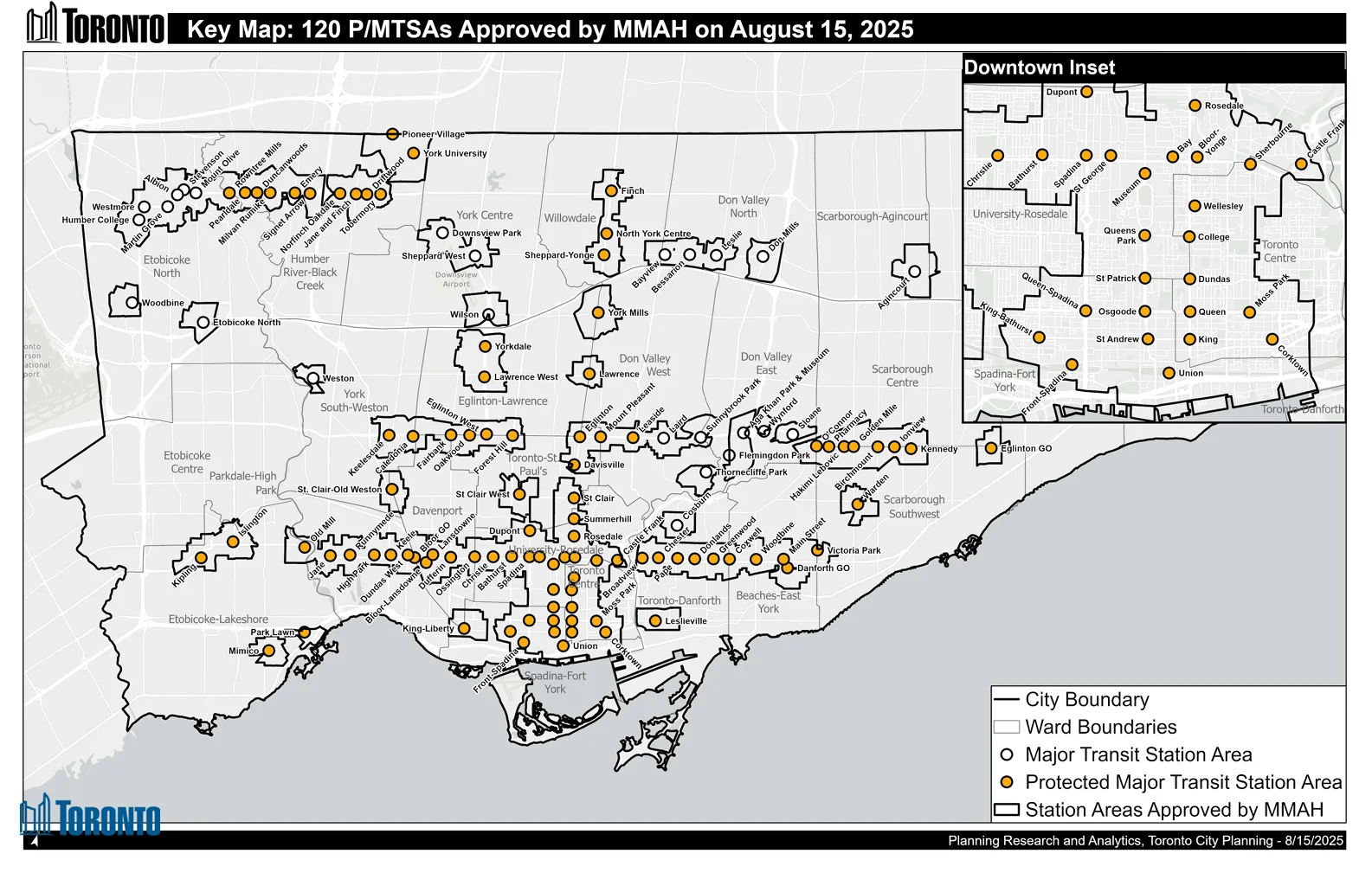
- Protected Major Transit Station Areas (PMTSAs): Legally adopted under the Planning Act and protected from appeal, ensuring consistent growth aligned with provincial density targets.
Each MTSA designation includes policies on:
- Minimum density (measured in Floor Space Index or FSI)
- Building heights and setbacks to integrate with surrounding neighborhoods
- Land use mix (residential, commercial, institutional)
- Reduced parking requirements to promote transit reliance
Read Also: Front Yard Setback Averaging in Toronto
Why MTSAs Matter for Developers and Homeowners
Being inside an MTSA can influence your site’s development potential. According to the City’s resources, these areas are planned to support efficient use of land near transit and help create accessible communities. Key reasons MTSAs matter include:
Strong policy support for growth
MTSAs are expected to accommodate more people and jobs. This reinforces proposals that introduce additional residential units or mixed-use buildings where appropriate.
Predictability in PMTSAs
Once a PMTSA is approved, the land use permissions and density targets are protected. This helps long-term planning for projects like fourplex permit Toronto, triplex additions, and small-scale mixed-use buildings.
Walkable, transit-supportive communities
Policies encourage active transportation and development patterns that place housing and employment close to major transit services.
Alignment with the Official Plan
MTSAs integrate with the city’s broader land use framework. Built form, transitions, and public realm policies still apply, but the intention for growth around stations is central.
2025 Policy Framework: How MTSAs Are Defined and Measured
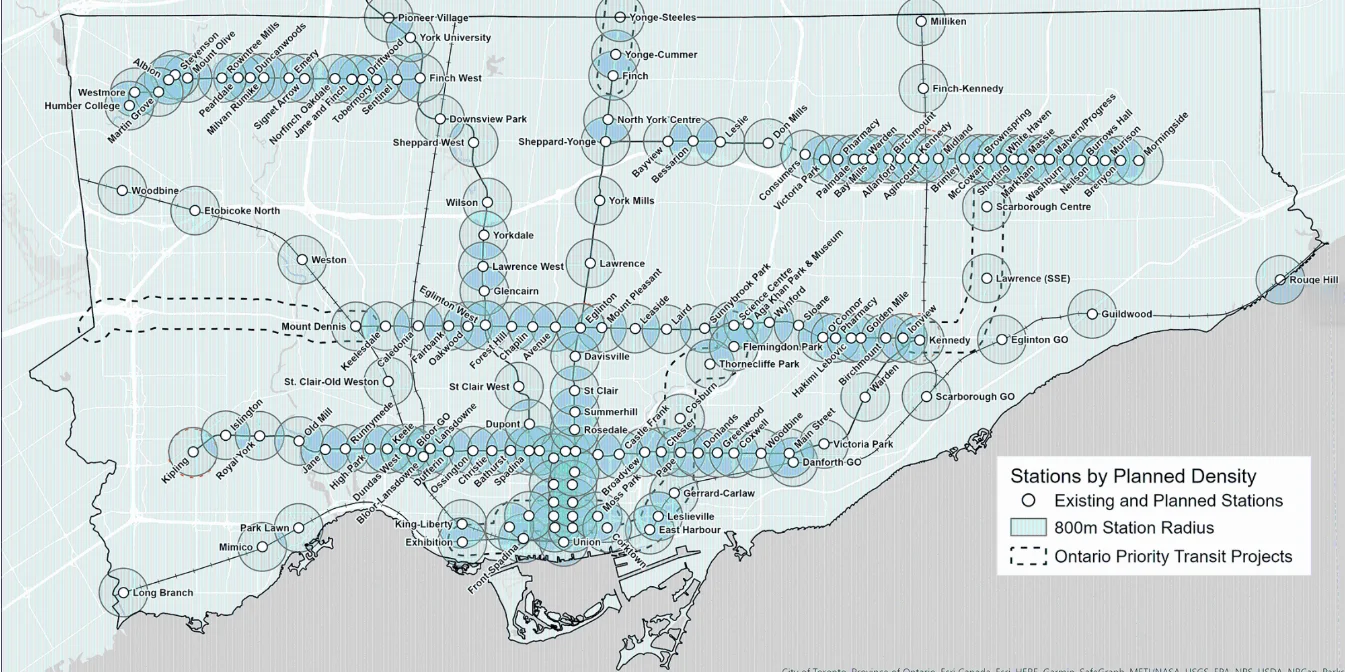
The City of Toronto uses mapping and statistical models to delineate MTSA boundaries and calculate population and employment targets.
- Radius and Accessibility: Typically, a 500–800-meter radius around a transit stop, adjusted for real-world walkability.
- Density Target: Expressed as people plus jobs per hectare, commonly 200–300 combined density near subway stations.
- Land Use Composition: Encourages mixed-use development with residential above retail, office, or institutional uses.
- Official Plan Alignment: MTSAs are embedded within the Official Plan and supported by Zoning By-law amendments to match the target densities.
These targets directly influence how the city interprets rezoning, building permit, and site plan applications in and near MTSA boundaries.
Key Interpretation Principles (from 2025 Guidance)
The MTSA Policy Interpretation Guidance sets out essential directions that shape how planning applications are evaluated.
Development Must Be Transit-Supportive
Buildings should prioritize pedestrian and cycling access, limit vehicle parking, and provide active ground-floor uses near stations.
Minimum Density Targets
Each MTSA has a minimum density requirement to ensure land near stations is used efficiently. For example, a site zoned CR 3.0 (c1.5; r2.5) might need to meet or exceed a certain FSI threshold before approval.
No Downzoning Within PMTSAs
Once a PMTSA is adopted, municipalities cannot reduce its planned density or limit permitted uses. This provides long-term development certainty.
Mixed-Use Integration
Residential, retail, and employment uses should be balanced. Purely single-use developments, such as low-density housing only, are discouraged unless part of a transition zone.
Compatibility with Adjacent Areas
Transition policies ensure that MTSA intensity steps down toward Neighborhoods, Apartment Neighborhoods, and Employment Areas, preserving local character.
How MTSAs Affect Zoning and Permits
Zoning Flexibility
Properties within MTSAs may already have as-of-right zoning permissions for additional units or height increases. This benefits those seeking:
- Home extension permits in Toronto
- Second floor additions
- Basement permits or legal basement conversions
- Multiplex or fourplex developments
Parking and Access
The 2025 policies further reduce or eliminate minimum parking standards near transit stations. This change supports sustainable design and allows more efficient use of land.
Building Form and Public Realm
Projects must respect built form guidelines, ensure active street-level design, provide setbacks for pedestrian comfort, and create mid-block connections where possible.
Affordable and Inclusive Housing
Many MTSA policies promote inclusionary zoning that requires a portion of residential floor area to be affordable housing, especially in PMTSA corridors.
Opportunities for Property Owners and Small Developers
If you own land near a subway, LRT, or GO station, you may be sitting on untapped development potential. Examples include:
- Adding a laneway suite in Toronto or garden suite in MTSA zones that support intensification.
- Converting a single-family home into a triplex or fourplex with improved density permissions.
- Redeveloping small commercial lots for mixed-use buildings that combine retail and residential space.
Before starting, it’s essential to check the MTSA map layer in the City’s interactive zoning viewer or consult Land Signal for a professional zoning interpretation.
How Land Signal Can Help
At Land Signal, we help property owners and developers understand and take advantage of Toronto’s evolving zoning landscape.
Our team specializes in:
- Confirming whether your property falls within an MTSA or PMTSA
- Preparing zoning and planning analyses to maximize allowed FSI
- Assisting with home building permits, renovation permits, and garden suite or laneway suite designs in MTSA areas
- Coordinating with architects and consultants to ensure full compliance with the 2025 policy framework
Whether you’re planning a home extension, second floor addition, or new multiplex project, Land Signal makes the process smoother from feasibility to permit approval.
Final Words
Toronto’s 2025 MTSA framework marks a major step toward a more connected and sustainable city. For homeowners and developers, it introduces new opportunities for growth near transit while encouraging compact, walkable neighborhoods. Understanding how these policies influence zoning and building potential is essential for smart planning.
I believe the MTSA policy reflects a positive shift in how Toronto approaches growth. It encourages people to live closer to the places they work and move around more efficiently, which feels right for the city’s future. From my experience watching Toronto evolve, the real success of this plan will come from thoughtful implementation that keeps community character and livability at its heart.
References
- City of Toronto (2025). MTSA Policy Interpretation Guidance. City Planning Division, Growth Strategies Unit.
Memorandum dated October 10, 2025, providing implementation direction on Major Transit Station Area (MTSA) and Protected Major Transit Station Area (PMTSA) policies, density permissions, parking requirements, and Official Plan interpretations. - City of Toronto (2024). 4Stories: Planning for Growth Around Transit Stations.
Retrieved from https://storymaps.arcgis.com/stories/b27b774fe9f04047b14956f689a7762f.
Interactive presentation outlining Toronto’s approach to transit-oriented growth, station typologies, and development patterns in MTSAs. - City of Toronto Official Plan – Chapter 8 (Site and Area Specific Policies).
Consolidated version reflecting Minister-approved MTSA and PMTSA boundaries and density permissions. Available through the City of Toronto Planning website:
https://www.toronto.ca/city-government/planning-development/official-plan-guidelines/official-plan/. - Government of Ontario (2020–2024). A Place to Grow: Growth Plan for the Greater Golden Horseshoe.
Ministry of Municipal Affairs and Housing. Policy framework establishing MTSA density targets and transit-oriented community principles across the GGH region.