







When planning a new build or extension in Toronto, one of the first questions is: how far back does my home need to sit from the street? While standard zoning rules set clear front yard setback requirements, there’s a useful exception called setback averaging. This rule can allow you to build closer to the street giving you valuable extra space at the rear of your lot.
Zoning By-law(s): City of Toronto Zoning By-law 569-2013
What is a Front Yard Setback?
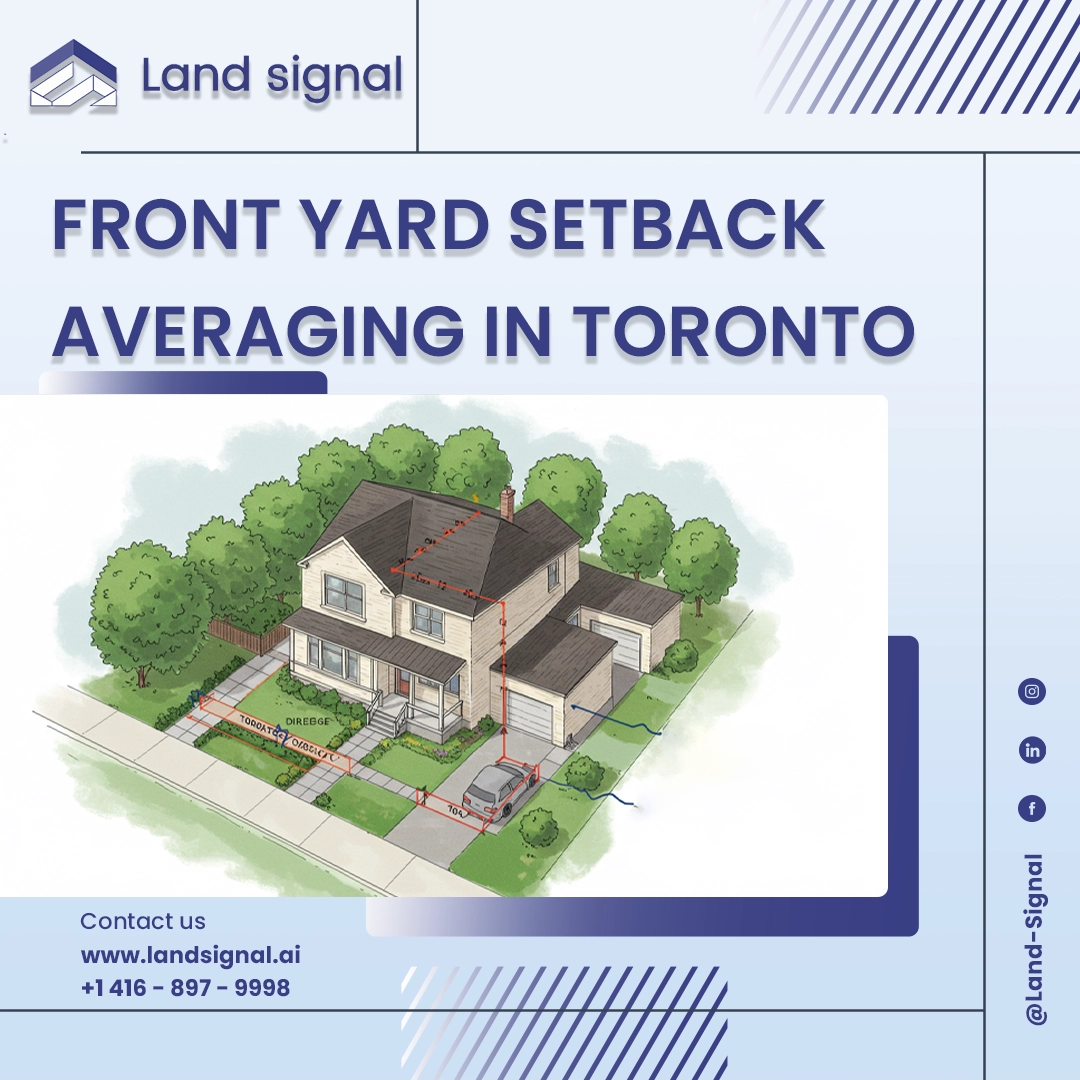
A front yard setback is the required distance between the front property line and the closest wall of your building. In Toronto, setbacks are meant to keep neighborhoods consistent, ensuring houses line up neatly along a street.
But thanks to the averaging rule, you don’t always need to follow the standard setback. Instead, your required distance may depend on your neighbors’ homes.
Front Yard Setback: means a horizontal distance on a lot measured at a right angle from the front lot line to the nearest main wall of a building or structure.
How Setback Averaging Works
The Rules:
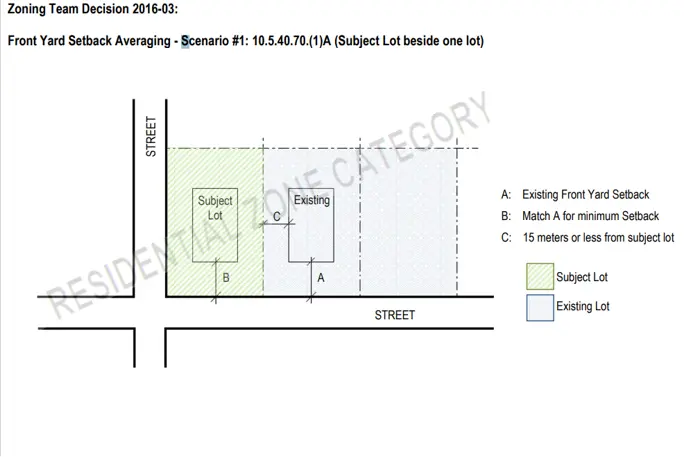
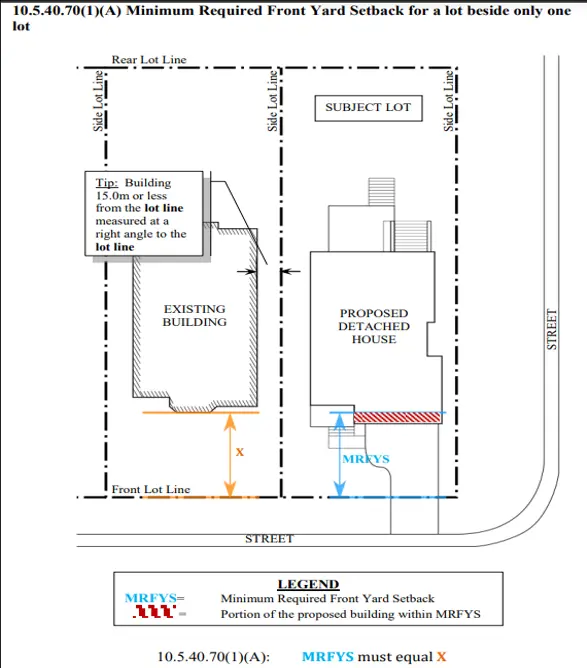
One Neighbor Scenario
- If your property is beside one neighboring house, and it’s within 15m of your lot, you must match its front yard setback exactly.
Example: If your neighbor’s house sits 4m from the street, your new build must also sit 4m back.
Two Neighbor Scenario
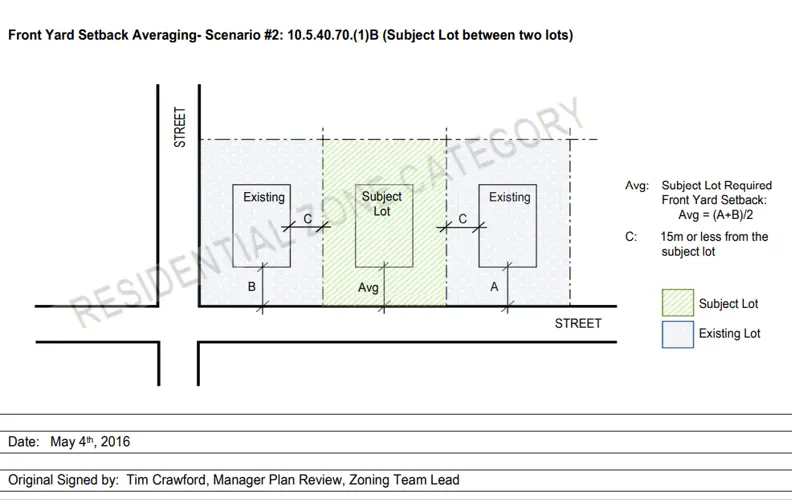
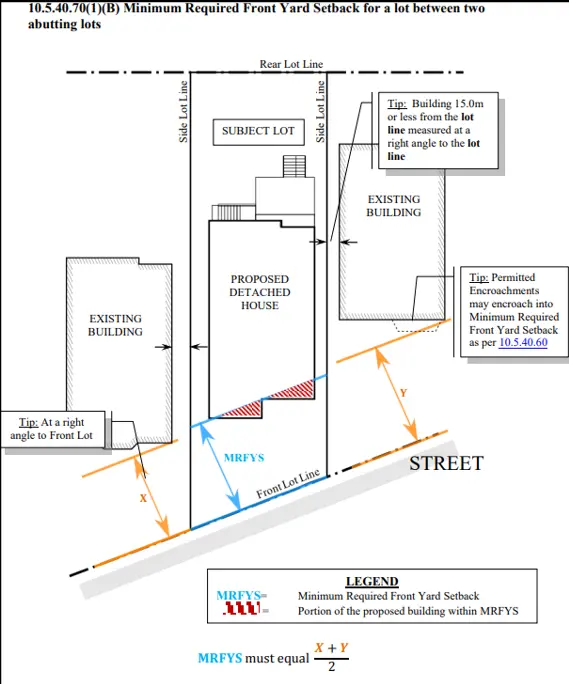
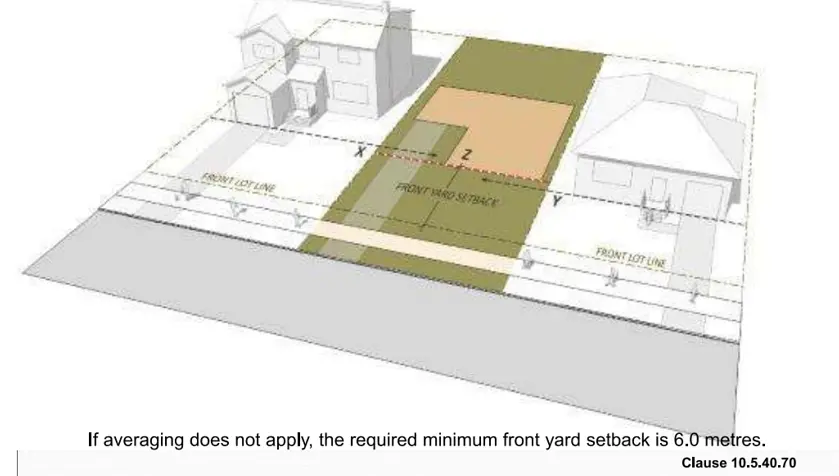
- If your property is located between two neighboring houses (within 15m), your required front yard setback becomes the average of both.
Example: If one neighbor sits 3m back and the other 5m back, your setback would be 4m.
Neighboring Setbacks
How It Works
Instead of following standard zoning setbacks, you calculate based on existing buildings around you. If your neighbors built closer to the street, you can too. If they built farther back, you must follow suit. The 15-meter rule matters. Only neighboring buildings within 15 meters of your lot count for averaging calculations.
Read Also: Front Yard Parking Rules in Toronto
The Strategic Advantage:
This rule often allows buildings closer to the street than standard zoning permits. In established neighborhoods where older homes sit closer to the street, averaging can give you extra buildable depth on your lot.
How Land Signal Can Help
At Land Signal, we specialize in turning zoning rules like setback averaging into real opportunities for your project. Whether you’re applying for a home building permit Toronto, a home extension permit Toronto, or a multiplex permit Toronto, our team:
- Reviews your lot to identify setback averaging opportunities.
- Ensures your design complies with zoning laws and Ontario building code.
- Prepares and submits your permit application quickly and accurately.
- Helps you maximize buildable space without risking delays or rejections.
Planning your budget? Try our home building cost calculator Ontario to estimate how setback rules could affect your project’s costs.
Final Note
Toronto’s averaging rules can be easily used to your advantage if you would be smart enough to use them. It’s not about building by the book, It’s about knowing where could the laws apply to your benefit. Use your neighbors’ setbacks to your advantage and build smarter.