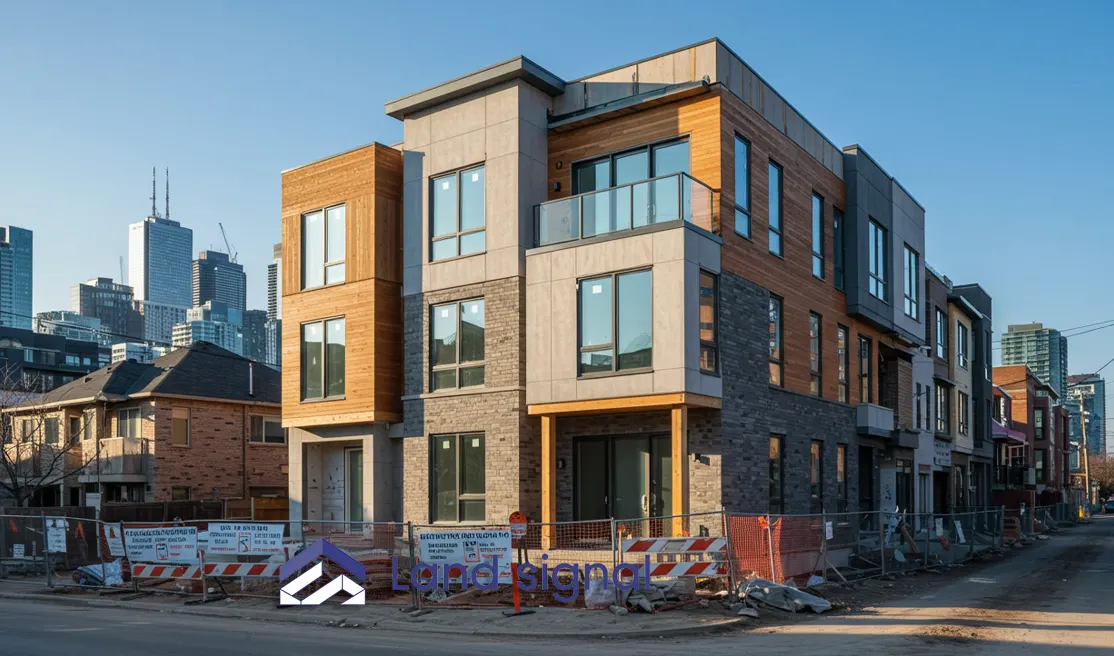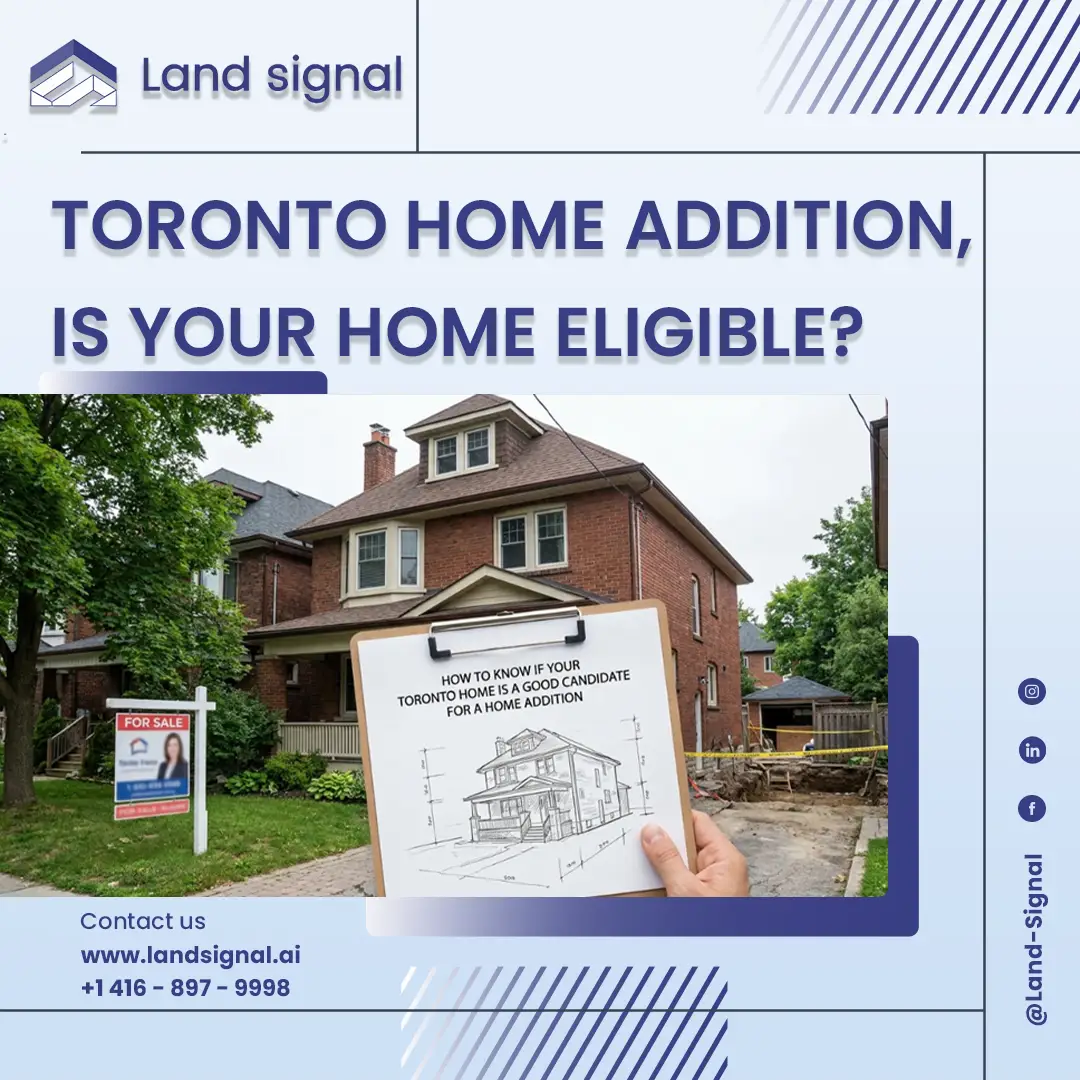







A home addition can be an exciting project to start when you need a change but relocating is too much trouble. Before jumping into that, however, you must know that not every Toronto home is a good candidate for a home addition. There could be complications regarding the zoning rules, or the house itself might not have the right conditions. Before you start planning, it’s important to understand what factors determine feasibility so you don’t face unnecessary drawbacks later on.
In this guide, we’ll walk through the key signs your home is a strong candidate, along with zoning rules, structural considerations, and what to expect during the approval process.
Start Your Project with Confidence
At Land Signal, we assist with construction and renovation permits, as well as Garden House and Laneway Suite designs. Let our experts guide you through every step.
What Makes Your Home a Strong Candidate for an Addition
Some properties are naturally better suited for expansion. Here are the main indicators that your home may be a good fit.

You Have Unused Lot Space or Vertical Expansion Potential
If your property has extra backyard space or room to build upward, you already have a major advantage. Many homes, especially older ones, sit on lots that can accommodate rear or second floor additions in Toronto.
Common opportunities include:
- Building into a deep backyard
- Adding a second or third floor
- Expanding over an existing garage
Zoning Allows Additional Square Footage
Even if you have space, local zoning bylaws determine what you’re allowed to build. If your zoning permits additional floor area, your chances of approval increase significantly. We’ll break this down in more detail below, but in general, favorable zoning is a key green flag.
The Structure Is in Good Condition
Your existing home needs to be structurally sound to support an addition. If the foundation, framing, and load-bearing elements are in good shape, the process will be much smoother. Homes with major structural issues can still be expanded, but costs will rise quickly due to necessary reinforcements.
The Project Aligns with Neighborhood Property Values
It’s important to consider your ROI. If your planned addition pushes your home’s value far beyond others in your area, it may not make financial sense.
A good candidate property is one where:
- Nearby homes have similar upgrades
- The neighborhood supports higher property values
- The addition won’t over-improve the home
Understanding Zoning and Bylaws in Toronto
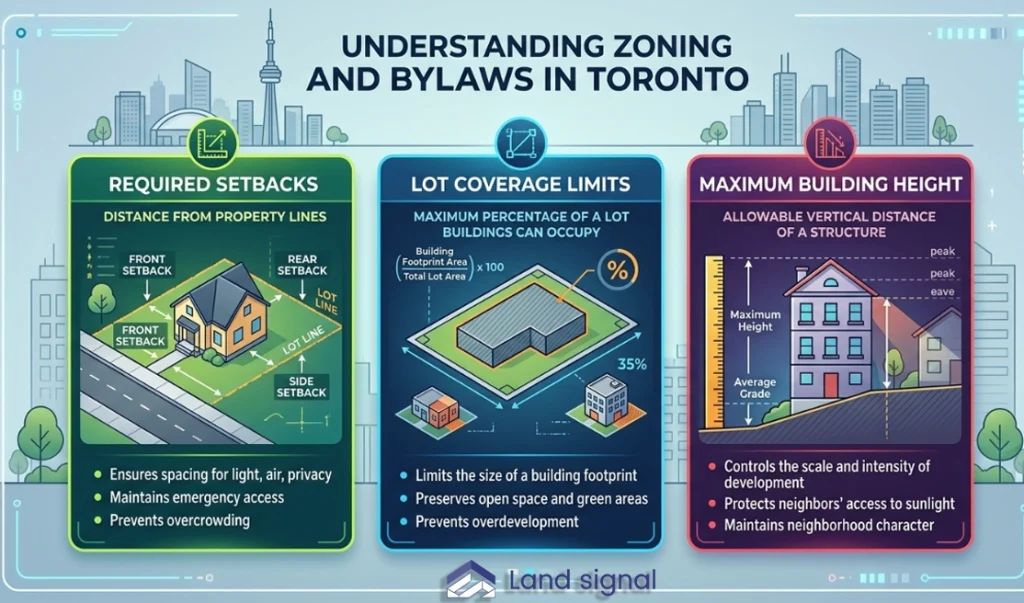
Zoning bylaws in Toronto play a huge role in determining what you can and can’t build. Before planning an addition, you need to understand these key restrictions.
Maximum Building Height
There are limits on how tall your home can be. This affects whether you can add extra floors or expand upward.
Lot Coverage Limits
Lot coverage refers to how much of your property can be occupied by structures. If your home already takes up a large portion of the lot, your ability to expand outward may be limited.
Required Setbacks
Setbacks are the minimum distances your structure must maintain from property lines. If your current home already sits close to property lines, you may need special approvals or minor variances. These rules impact:
- Side extensions
- Rear additions
- Overall building footprint
Lot Size and Layout: Does Your Property Support an Addition?
The size and shape of your lot play a big role in what’s possible. Townhouses and tightly spaced properties can still be expanded, but they often come with more restrictions and design challenges. Good candidates for home additions typically have:
- Deeper lots, which are common in older Toronto neighborhoods
- Detached or semi-detached homes with more flexibility
- Clear access to the backyard for construction
Permits and Approval Process in the GTA
In the Greater Toronto Area, you’ll need proper permits before starting construction. If your design doesn’t fully comply with zoning bylaws, you may need to apply for a minor variance through the local committee of adjustment.
The process typically involves:
- Submitting architectural drawings
- Zoning review and compliance checks
- Structural and engineering approvals
- Home building permits issuance
How Land Signal Helps You Plan the Right Home Addition in Toronto
At Land Signal, we help homeowners confidently determine whether their property is a strong candidate for a home addition and guide them through every step of the process. From early feasibility to final approvals, our team ensures your project is practical, compliant, and aligned with your long-term goals.
We support your home addition journey by providing:
- Zoning and feasibility analysis to evaluate lot size, setbacks, height limits, and allowable square footage before design begins
- Architectural planning and design support tailored to your home’s structure and your lifestyle needs
- Structural assessment and engineering coordination to ensure your existing home can safely support the addition
- Permit application and approval management to streamline submissions and avoid unnecessary delays
- Cost planning and project guidance so your investment aligns with neighborhood value and long-term ROI
Whether you’re exploring a second-story addition, rear extension, or garage expansion, Land Signal helps turn your ideas into a well-planned, fully approved project so you can move forward with clarity and confidence.
Conclusion
While not every home in Toronto is a perfect candidate for an extension, many are with the right planning. If you have available space, favourable zoning and a solid structure, you’re already on the right track.
The key is to do your homework early on. When all the pieces fall into place, extending your home can be one of the smartest ways to upgrade your living space without leaving the neighbourhood you love.
FAQ
A full project typically takes 8–15 months. This breaks down into 3–6 months for design and permits, and 4–8 months for construction.
You must apply for a Minor Variance through the Committee of Adjustment (COA). This adds 3–6 months to your timeline.
For minor ground-level additions, yes. However, for second-story additions or “full-gut” renovations, most contractors recommend moving out due to noise, dust, and the temporary removal of the roof.
Sources
- City of Toronto. (2025). Zoning By-law Preliminary Reviews and Zoning Applicable Law Certificate.
Official guidance on how zoning compliance is assessed before submitting a building permit application, including requirements for site plans, drawings, and applicable law reviews.
Retrieved from https://www.toronto.ca/city-government/planning-development/zoning-by-law-preliminary-zoning-reviews/ - Betterview Construction. (2025). How to Know If Your Property Is Suitable for a Home Addition in the GTA.
Explains key factors such as zoning restrictions, lot size, structural feasibility, and budget considerations when evaluating if a property can support an addition.
Retrieved from https://www.betterviewltd.ca/blog/how-to-know-if-your-property-is-suitable-for-a-home-addition-in-gta - Grand Design Build. (2025). Home Addition Toronto: What Homeowners Must Know Before Building.
A detailed look at zoning rules, building code constraints, and planning considerations that influence home addition projects in Toronto.
Retrieved from https://granddesignbuild.com/blogs/home-addition-toronto/ - MS Builders. (2025). How to Choose the Right Home Addition.
Provides guidance on selecting the right type of home addition based on lifestyle needs, property limitations, and long-term value considerations.
Retrieved from https://msbuilders.ca/how-to-choose-the-right-home-addition/