







A house starts from the foundation, and foundation problems mean risks for the whole house. If the foundation isn’t strong enough for the house anymore, it’s only natural that it would raise concerns. Deeper foundation issues require a strong solution,...

Residential Underpinning – What Homeowners Should Know

Content Management Team

Lorem ipsum dolor sit amet, consectetur adipiscing elit. Ut elit tellus, consectetur adipiscing elit.

Residential Underpinning: Everything You Should Know

A house starts from the foundation, and foundation problems mean risks for the whole house. If the foundation isn’t strong enough for the house anymore, it’s only natural that it would raise concerns. Deeper foundation issues require a strong solution, and that solution usually comes in the shape of residential underpinning. Underpinning a house is...
Residential Underpinning – What Homeowners Should Know

Author

Farnaz Bigdeli
Author Photo LinkedIn

Farnaz Bigdeli, MBA, PMP

Farnaz Bigdeli, MBA, PMP, co-founder of Land Signal, specializes in applying data science and strategic foresight to decode complex building regulations and optimize project profitability.

View editorial process

Reviewed By

Amir M.Khazaneh
Author Photo LinkedIn

Amir M.Khazaneh, P.Eng.

Amir M. Khazaneh, P.Eng., COO/CEO of Land Signal, is a Professional Engineer specializing in construction management and rigorous site supervision to minimize project delays.

View editorial process

Updated On

December 24, 2025

Category

Read Time

7 Mins to Read

Updated on

December 24, 2025

Post Category

Read Time

7 Mins to Read
A house starts from the foundation, and foundation problems mean risks for the whole house. If the foundation isn’t strong enough for the house anymore, it’s only natural that it would raise concerns. Deeper foundation issues require a strong solution, and that solution usually comes in the shape of residential underpinning. Underpinning a house is a safe and effective way to redistribute the balance by reinforcing the existing foundations. In this guide, we’ll explain what underpinning is, why it may be needed, when it becomes necessary, the common methods used, and what to consider before moving forward.
What Residential Underpinning is and Why Homes Need it

Residential underpinning is a construction process concerned with strengthening the preexisting foundation of a house. This is typically done by extending the foundation deeper or improving its ability to support the weight of the building or provide area with more height. When the original foundation can no longer support the house, residential underpinning is used since it can restore stability, prevent further movement, and protect the long-term structural integrity of the home. There are many reasons as to why a house might need residential underpinning, including:
  • Soil conditions changing overtime due to moisture loss, erosion, or poor compaction
  • High water table condition
  • Tree roots
  • Plumbing leaks
  • Excavation and nearby constructions/Angle of repose of adjacent property footing
  • Weak original foundation

Start Your Project with Confidence

At Land Signal, we assist with construction and renovation permits, as well as Garden House and Laneway Suite designs. Let our experts guide you through every step.

Signs Your Home May Need Residential Underpinning

Not all foundation problems need residential underpinning to be fixed, but there are a few signs that if you notice, your house probably needs underpinning. Of course, it’s always better to get a professional’s opinion on matters such as this. You may need residential underpinning if you notice:
  • Large or widening cracks in walls, ceilings, or floors
  • Uneven or sloping floors
  • Doors or windows sticking or going out of alignment
  • Gaps between walls and ceilings or floors
  • Visible foundation movement or settlement
  • Ongoing foundation issues despite previous repairs
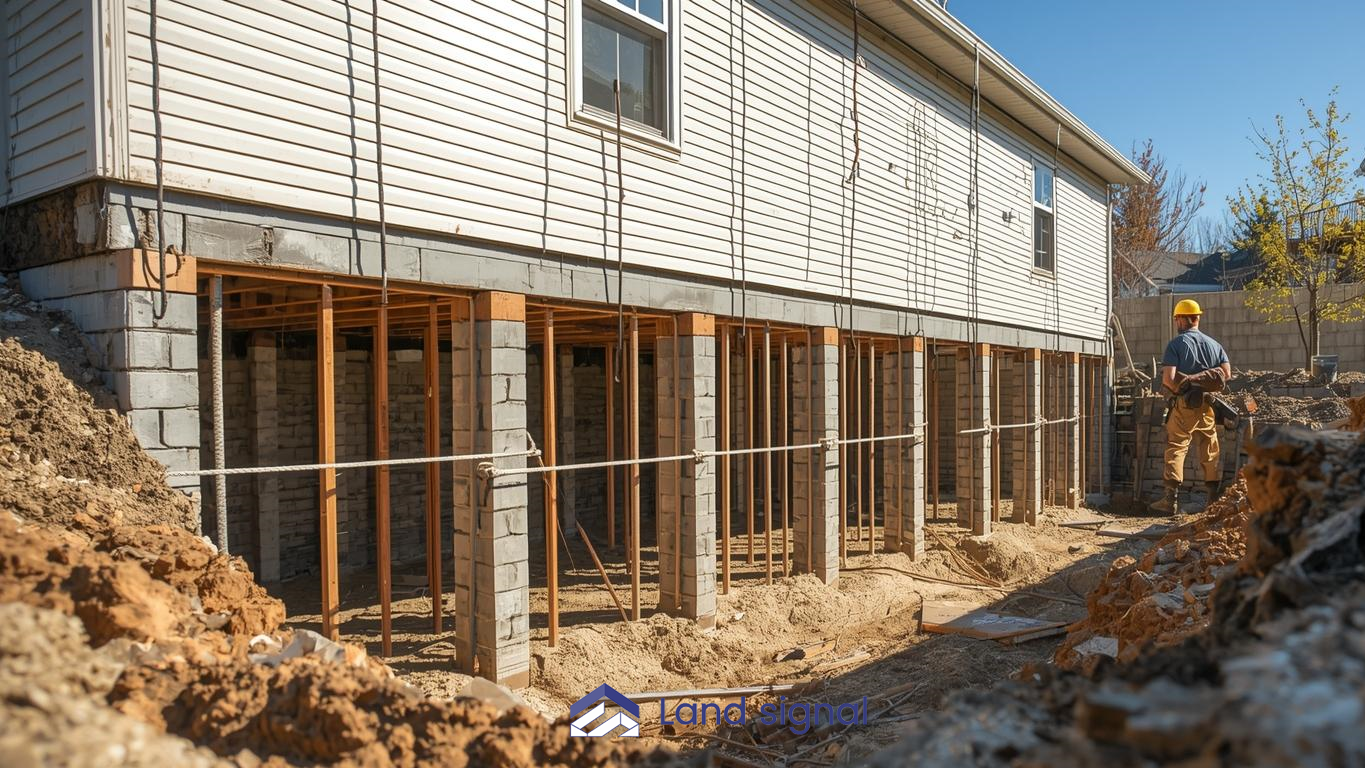
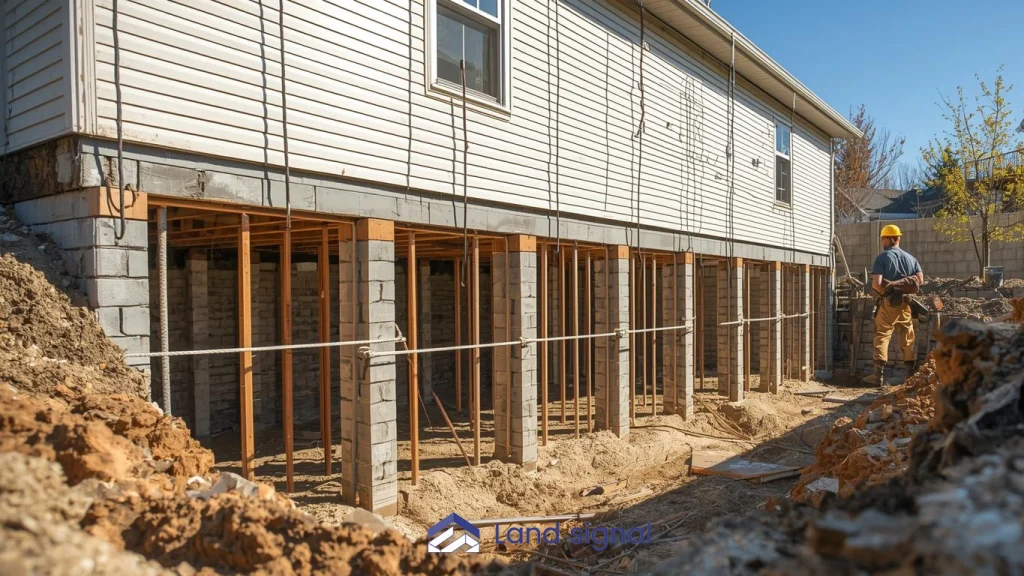
Residential underpinning project showing temporary supports and reinforced foundation walls to increase basement height.

Different Types of Residential Underpinning

There are more than one residential underpinning method. Each one suits a certain soil condition, foundation type, amount of access, and the extent of the problem.
  1. Mass Concrete Underpinning: This is one of the most traditional ways. Concrete is poured beneath the existing foundation in sections to make it deeper and stronger. It’s usually used for low-rise residential properties.
  2. Beam and Base Underpinning: This method uses reinforced concrete beams placed beneath the foundation, which transfer the load to concrete bases at a lower level. It’s often the go-to choice when foundations need support over a wider area.

Planning Ahead for Residential Underpinning

Before taking action, be sure to take note of some points to consider for residential underpinning. Careful planning and expert guidance can make the process smoother and more predictable. There are several important factors to think about:
  • Cause of the problem: Underpinning should address the root cause of foundation movement, not just the symptoms.
  • Soil conditions: A soil assessment will help you work out the best way to underpin. sandy soil like beached area is the most difficult soils for underpinning
  • Cost and timeline: Underpinning is a big structural project, so it needs proper budgeting and planning. usually underpinning will be happened in 4 stages and non of them is not allowed to be started before completion of previous one and inspection.
  • Disruption: Some methods involve digging and causing a bit of a headache inside or outside the home.
  • Professional assessment: Working with experienced specialists guarantees that the solution is safe, compliant, and effective.

How Land Signal Helps Homeowners With Residential Underpinning

LandSignal guides homeowners, builders, and developers through the planning and permit requirements associated with residential underpinning and foundation reinforcement projects. Our team supports clients with:
  • Zoning and permit guidance for underpinning, basement lowering, and structural foundation work
  • Access to architectural and structural drawings that align with local building codes
  • Referrals to experienced and vetted underpinning and foundation contractors
  • Clear cost planning using tools like our construction and renovation cost estimator
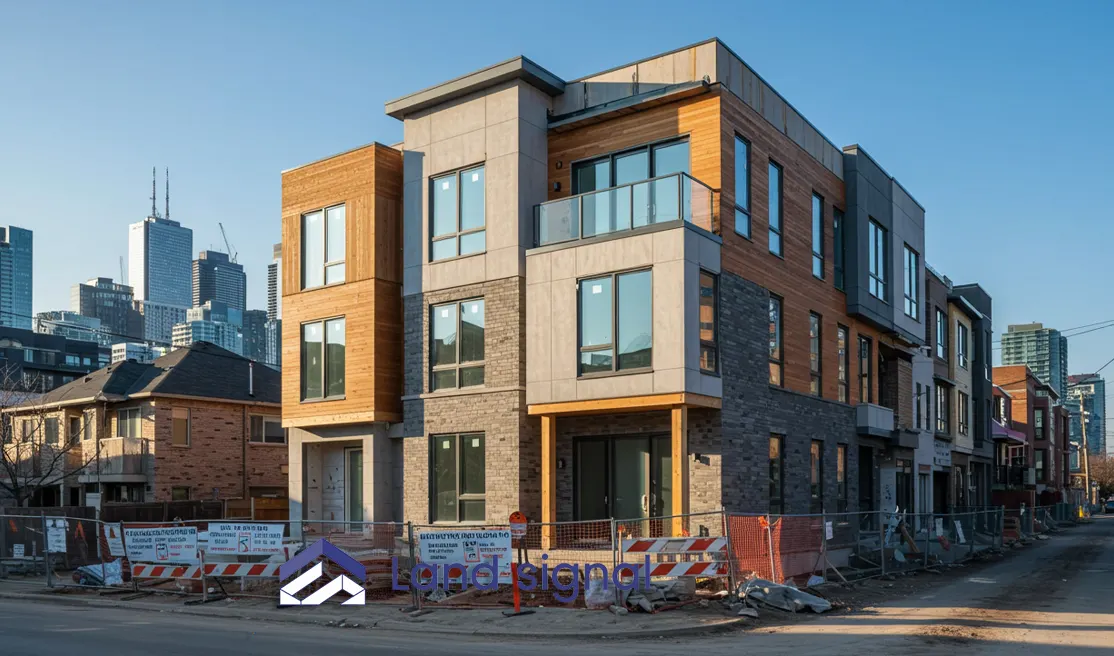
Whether you’re stabilizing an existing foundation, planning a deeper basement, or preparing for a structural upgrade, Land Signal helps simplify the process by providing accurate information, trusted professionals, and clearer next steps.

Conclusion

Residential underpinning is a great way to keep homes stable if they’re having problems with their foundations or soil. It might sound a bit scary, but underpinning is often the best way to protect your property and prevent more serious damage in the future. I think that getting to grips with foundation problems early on and getting the professionals involved is the best way to put your mind at ease and make sure your home stays worth the money in the long run. If you get the right assessment and approach, residential underpinning can restore stability and confidence in your living space. If you need help with your residential underpinning or any sort of construction project, make sure to get in contact with our professional team at Land Signals for a straightforward process and better results.
  1. Foundation Solutions. (n.d.). What Is Underpinning and When Is It Needed? Explains the purpose of underpinning, the situations that call for it, and how it stabilizes foundations. Retrieved from https://foundationsolutions.com.au/what-is-underpinning-and-when-is-it-needed/
  2. Raise and Relevel. (n.d.). How Underpinning Can Save My Home. Covers the benefits of underpinning for homes with structural settlement issues and how the process strengthens foundations. Retrieved from https://raiseandrelevel.com/how-underpinning-can-save-my-home/
  3. Dalinghaus Construction. (n.d.). What Does Underpinning a House Mean? Offers a clear overview of underpinning techniques, why they’re used, and typical scenarios homeowners face. Retrieved from https://www.dalinghausconstruction.com/blog/what-does-underpinning-a-house-mean/
  4. (n.d.). Residential Foundation Underpinning & Repair. Discusses foundation repair using underpinning, common causes of settlement, and options for residential foundation stabilization. Retrieved from https://www.groundworks.com/resources/residential-foundation-underpinning-repair/

FAQ

Underpinning refers to the process of reinforcing an existing building foundation. This is necessary when the original foundation can no longer adequately support the structure. Such a situation often arises due to changes in the soil’s structure, which can be caused by the type of soil or external factors affecting the soil.

Purchasing an underpinned home can be a cost-effective option for acquiring a property that has already addressed structural issues. However, it also carries some risks, particularly in relation to mortgages, insurance, and future resale value.

Underpinning can be a more cost-effective choice than demolishing and rebuilding a structure entirely. By enhancing the existing foundations, it helps prevent the significant costs related to a complete foundation replacement.

Underpinning can be costly and may disrupt the surrounding area. It can also be intrusive, especially for internal walls. Difficult access points can pose significant challenges. The entire underpinning process may take up to three weeks.

Farnaz Bigdeli

Farnaz Bigdeli, MBA, PMP is a Co-Founder at Land Signal and a Strategy and Innovation expert. She leverages her extensive background in Data Science, Architecture, and Business to simplify complex building codes and transform regulatory challenges into predictable, profitable strategies for the construction industry.

Get In Touch

"*" indicates required fields

Plan Smarter. Build Easier.

Whether you’re exploring an addition, a suite, or a full redevelopment, Land Signal provides zoning clarity and expert planning support tailored to your property.

Get In Touch

"*" indicates required fields

Want a Free 30-Minute Consultation

"*" indicates required fields

Psst! Did you know we’ve got our