





Across Toronto, a single detached lot is no longer just a place for one family home. For many owners, it is now a chance to add more housing, more income, and more long term value without moving out of a...

Sixplex Permit Toronto

Content Management Team

Lorem ipsum dolor sit amet, consectetur adipiscing elit. Ut elit tellus, consectetur adipiscing elit.

Sixplex Permit Toronto – Everything You Need to Know About the City’s Multiplex Housing Strategy

Across Toronto, a single detached lot is no longer just a place for one family home. For many owners, it is now a chance to add more housing, more income, and more long term value without moving out of a familiar street. Sixplexes sit at the heart of this shift, turning underused low rise sites...
Sixplex Permit Toronto

Author

Farnaz Bigdeli
Author Photo LinkedIn

Farnaz Bigdeli, MBA, PMP

Farnaz Bigdeli, MBA, PMP, co-founder of Land Signal, specializes in applying data science and strategic foresight to decode complex building regulations and optimize project profitability.

View editorial process

Reviewed By

Amir M.Khazaneh
Author Photo LinkedIn

Amir M.Khazaneh, P.Eng.

Amir M. Khazaneh, P.Eng., COO/CEO of Land Signal, is a Professional Engineer specializing in construction management and rigorous site supervision to minimize project delays.

View editorial process

Updated On

December 11, 2025

Read Time

13 Mins to Read

Date Of Post

Updated on

December 11, 2025

Post Category

Read Time

13 Mins to Read

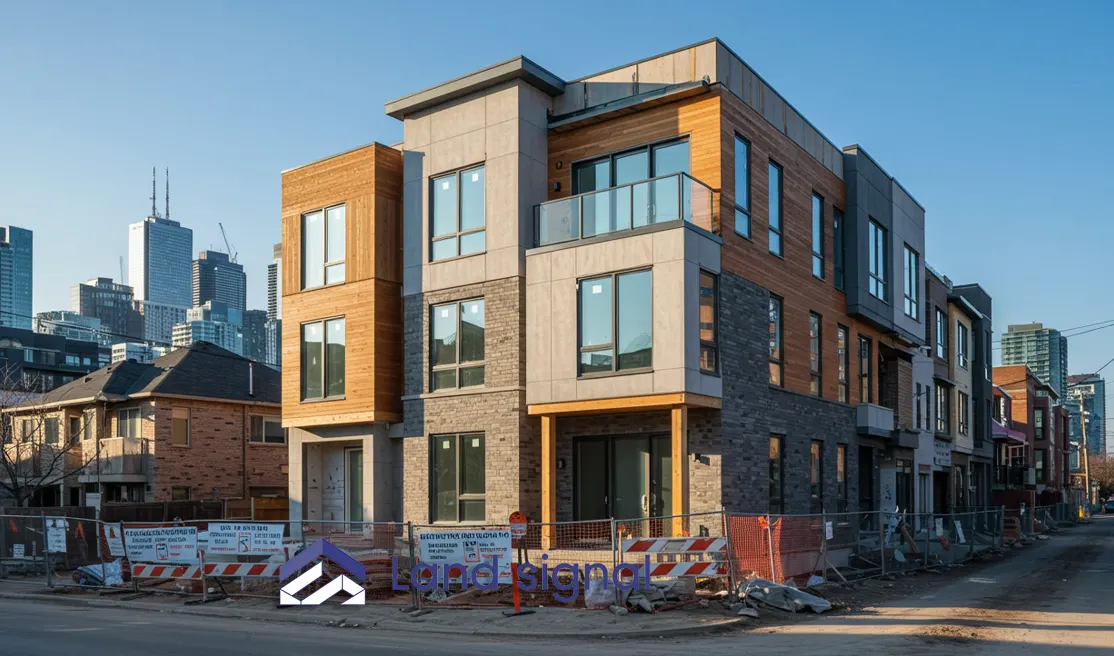
Across Toronto, a single detached lot is no longer just a place for one family home. For many owners, it is now a chance to add more housing, more income, and more long term value without moving out of a familiar street. Sixplexes sit at the heart of this shift, turning underused low rise sites into well planned multi unit buildings that still feel like part of a house neighborhood, not a tower district.

The challenge is that a sixplex is not a simple “bigger fourplex.” It sits at the intersection of new zoning policies, evolving housing targets, and strict Ontario Building Code requirements. Getting that balance wrong can stall an otherwise good project.

This guide explains how Toronto’s multiplex strategy is evolving, what a sixplex actually is in practice, where permissions stand today, and how a sixplex permit Toronto will likely work as citywide rules roll out. It is written for owners, builders, and small developers who want to be early movers, while staying firmly on the right side of policy and compliance.

Start Your Project with Confidence

At Land Signal, we assist with construction and renovation permits, as well as Garden House and Laneway Suite designs. Let our experts guide you through every step.

What Is EHON?

The Expanding Housing Options in Neighbourhoods (EHON) project is a comprehensive response to Toronto’s long-standing issue of restrictive zoning. Historically, over 70% of residential land in Toronto was zoned to permit only single-detached homes. This left little room for the types of housing that cater to modern urban populations – such as smaller households, seniors, newcomers, and young professionals.

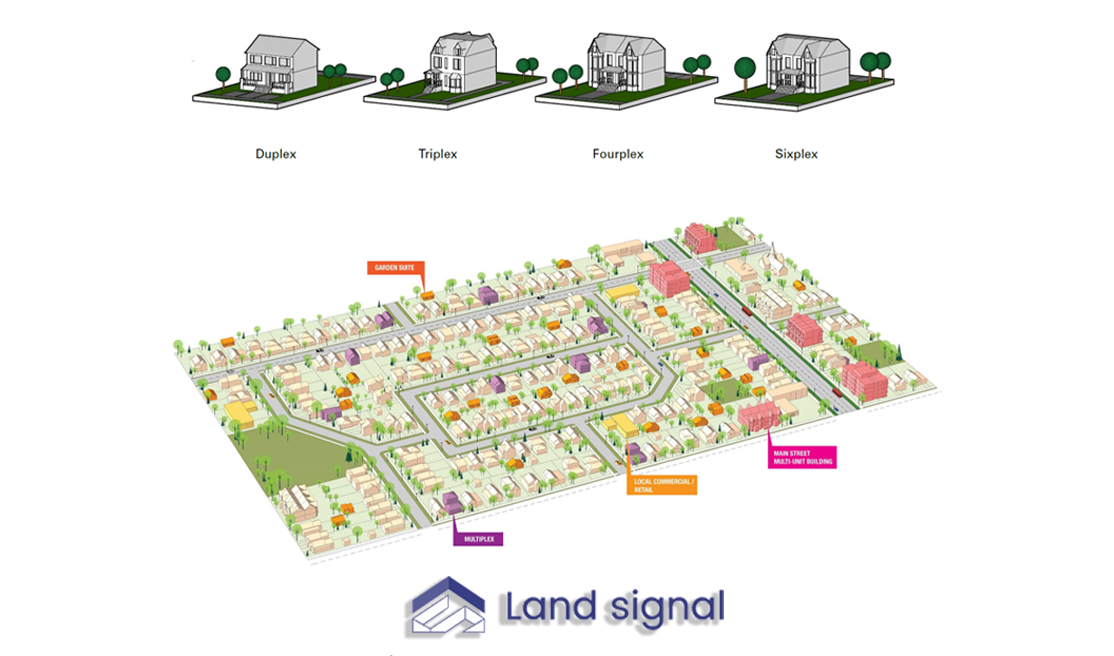
EHON introduces a wide array of low-rise housing forms to help meet Toronto’s diverse housing needs:

  • Laneway Suites (approved July 2019)
  • Garden Suites (approved February 2022)
  • Duplexes, Triplexes, Fourplexes (approved citywide in May 2023)
  • Multiplexes up to 4 units (citywide)
  • Five- and Sixplexes (currently in the citywide study phase)

This initiative not only improves equity and housing accessibility, but also supports climate goals, neighborhood revitalization, and economic development through localized population growth.

What Is EHON?
Images Source: City of Toronto

Why Sixplexes, and Why Now?

Expanding multiplex permissions now is about more than housing supply – it’s about delivering diverse, sustainable, and affordable housing in communities where growth has been stagnant. The sixplex model is specifically designed to allow for flexibility in unit mix, affordability, and rental tenure. Many proposed designs include three or more rental units, addressing the shortage of affordable rental options across the city.

These buildings also align with CMHC’s Housing Design Catalogue, which provides pre-approved sixplex templates to streamline the approval process and support faster construction timelines. This approach reduces permitting delays while encouraging thoughtful, human-scaled development.

In addition, the City is focusing on architectural flexibility, allowing sixplexes to adopt varied façades and layouts so that new developments blend with the character of existing neighborhoods. This helps ensure that increased density doesn’t come at the cost of neighborhood integrity.

The timing of this policy also aligns with affordability modeling. The City has evaluated cost and rent assumptions to ensure that the sixplex model is both economically viable for builders and accessible to tenants and buyers alike. The move to legalize sixplexes citywide is informed by intersecting social, economic, and policy drivers. The study highlights three major forces influencing the city’s shift:

Population Growth & Housing Demand

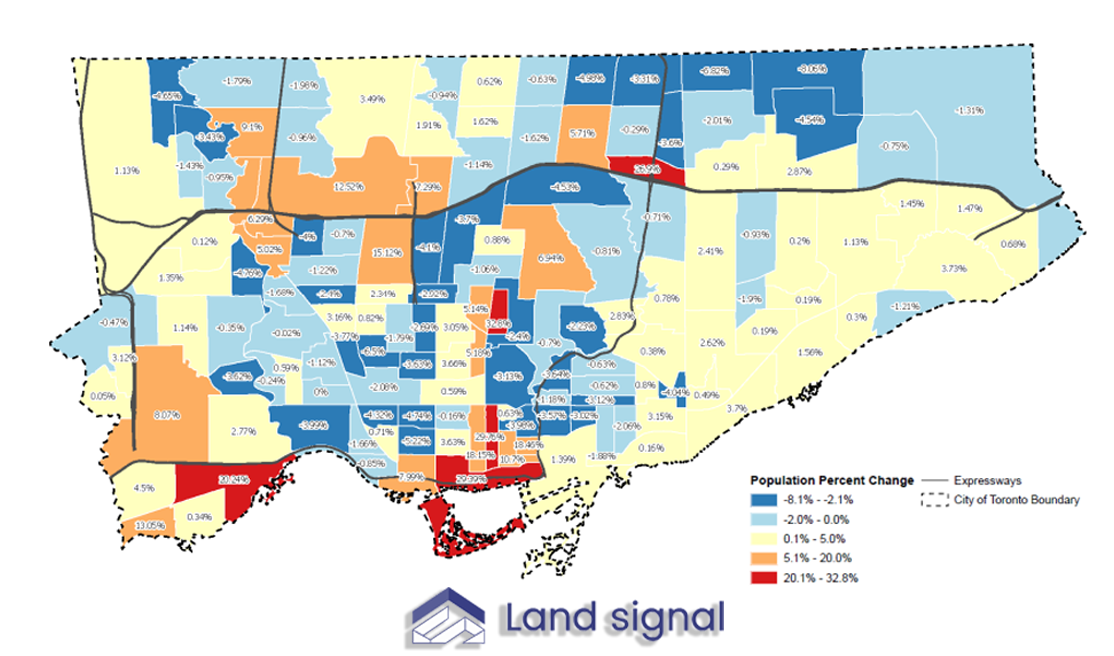
Population Change by Neighbourhood, 2016-2021
Image Source: City of Toronto

From 2016 to 2021, many neighborhoods in Toronto saw either slow or declining population growth. Meanwhile, housing demand continues to surge citywide. Allowing additional units in low-rise zones helps optimize underutilized land, reinvigorate aging communities, and support population retention and growth in key areas.
Provincial & Federal Mandates

  • Bill 23: More Homes Built Faster Act (2022) mandates that municipalities allow up to three units per lot without restrictive by-laws. This sets a province-wide baseline.
  • Ontario Regulation 462/24 strengthens this direction by overriding local zoning restrictions related to angular planes, lot coverage, separation distances, and more. It directly promotes additional residential units (ARUs) like garden suites and sixplexes.
  • Federal Supports include the CMHC Housing Design Catalogue, which provides pre-approved blueprints for sixplexes and other infill types, along with funding through the Housing Accelerator Fund.

A National Trend in Urban Planning

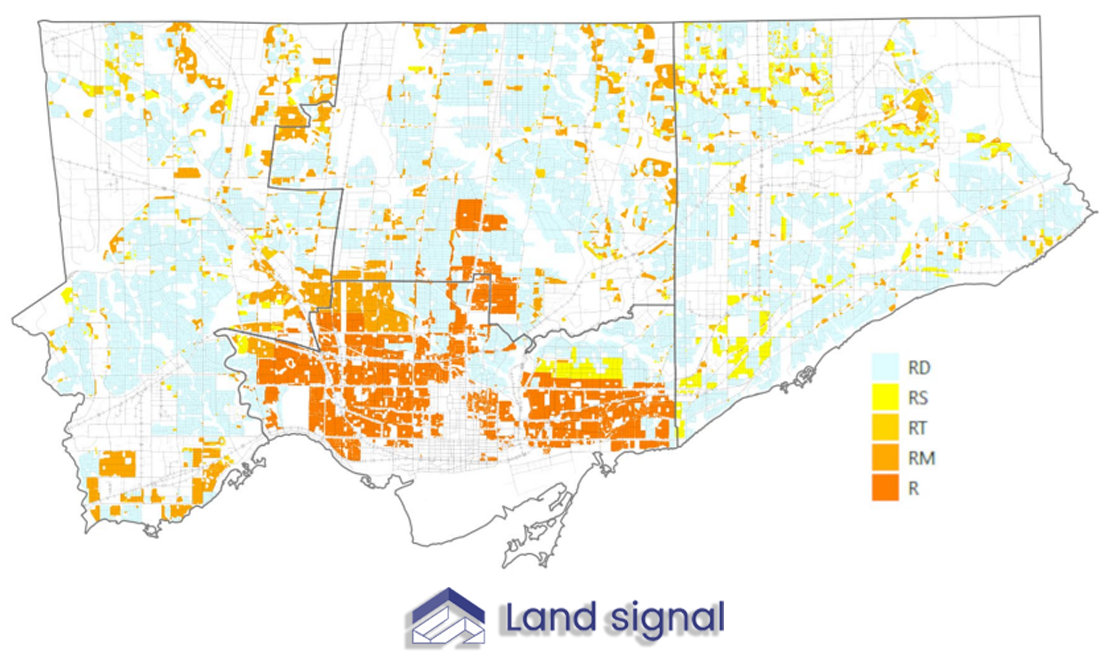
Residential Zones

Toronto’s sixplex policy aligns with a Canada-wide shift toward gentle density. Cities across the country are exploring ways to accommodate more people on less land. Sixplexes meet modern housing needs by offering a flexible, scalable solution that blends into existing neighborhoods.

What Is a Sixplex?

If you’re considering converting your property into a multi-unit development, such as a fourplex or sixplex, understanding what defines each structure is key.

A sixplex is a low-rise residential building that includes five or six dwelling units, usually stacked across two to three stories. It’s often considered part of the “missing middle” – housing that’s more compact than a detached home but less dense than a mid-rise apartment.

The City encourages unit diversity within sixplexes. Common configurations include:

  • One large, family-sized unit (2+ bedrooms) on the ground floor
  • Multiple 1-bedroom or studio units for singles, seniors, or young adults
  • Accessible, universally designed units to support aging in place and inclusive living
Images Source: City of Toronto
   

These buildings may be purpose-built or conversions from existing homes, and can be either rentals or small-scale condominiums. By design, they encourage mixed tenure and generational housing within established neighborhoods.

Toronto’s sixplex guidelines prioritize:

  • Minimum 1.2m side yard setback (on one side)
  • Garage not exceeding 50% of the front facade
  • Zero required parking spaces (but up to two allowed)
  • Universal accessibility and soft landscaping preservation If you’re considering converting your property into a multi-unit development, such as a fourplex or sixplex, understanding what defines each structure is key. A sixplex is a multi-unit residential building that contains five or six separate dwelling units, usually within a low-rise structure. It is a type of “missing middle” housing that bridges the gap between single-detached homes and mid-rise apartments.

Key features include:

  • Purpose-built or retrofitted structures on residential lots
  • Suitable for both rental and ownership models
  • At least one large unit (2+ bedrooms), typically on the ground floor
  • Compliance with zoning rules: height, setbacks, and lot coverage
  • Garage or on-site parking optional, with a focus on walkability

The City of Toronto’s guidelines recommend:

  • Minimum 1.2m side yard setback (on one side)
  • No more than 50% of the front facade dedicated to a garage
  • Zero required parking spaces (up to two allowed, lot permitting)
  • Preservation of landscaped open space
 

A Look at the Timeline: How We Got Here

The path to sixplex legalization has been incremental and strategic:

  • May 2023: Council approves fourplexes citywide
  • December 2023: Direction given to study citywide permissions for 5- and 6-unit buildings
  • March–November 2024: Ward 23 Pilot launches for real-world testing
  • February 2025: Ward 23 permissions for sixplexes approved (no appeals)
  • June 2025: Final report to Planning & Housing Committee for citywide implementation
  • December 2025: Proposed new performance standards for narrow and shallow lots

This structured rollout allows for public feedback, performance monitoring, and tailored policy refinement.

Design Testing: Can Sixplexes Fit Everywhere?

Unit Schematic in Narrow Lot Context
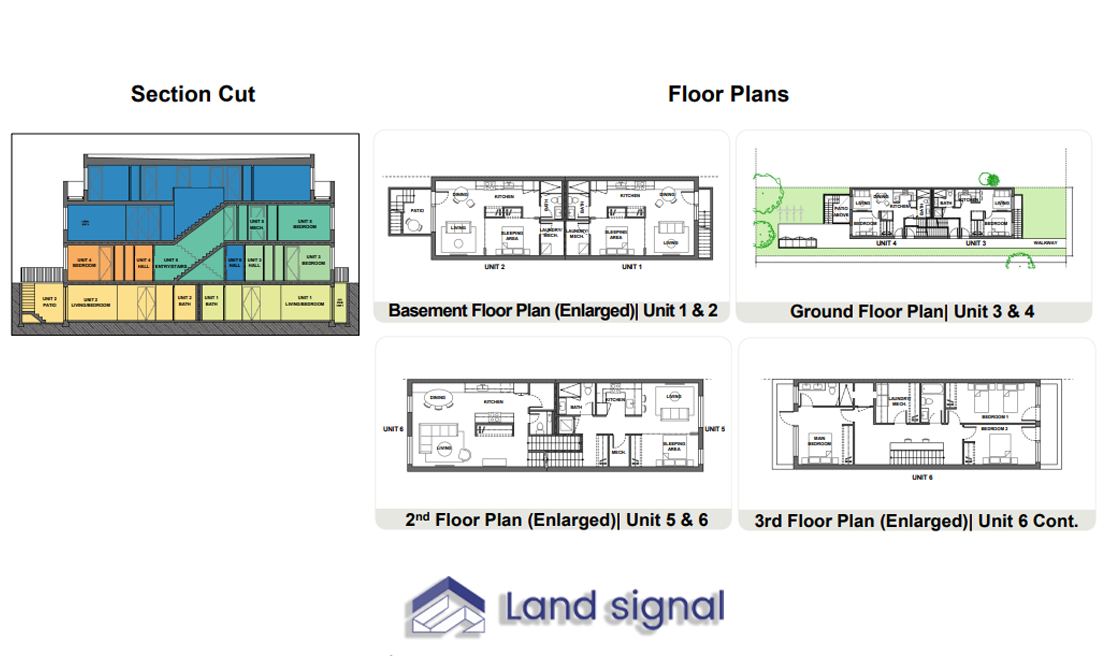
6-Unit Schematic in Narrow Lot Context
Images Source: City of Toronto

Just as securing a basement permit Toronto requires thoughtful planning for space efficiency and building code compliance, so does designing sixplexes across varying lot sizes. A core element of the study is fit analysis – ensuring that sixplexes can be built across a range of Toronto lot types without compromising design quality, infrastructure, or neighborhood character. Three lot types were tested:

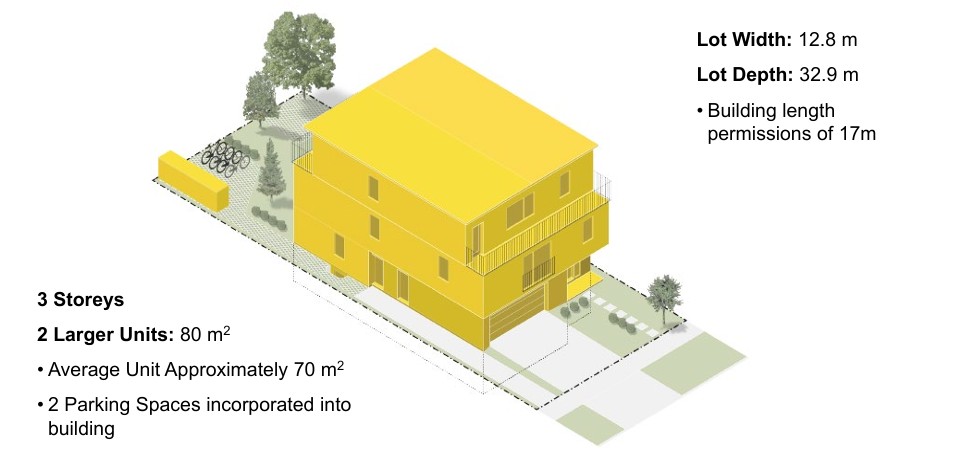
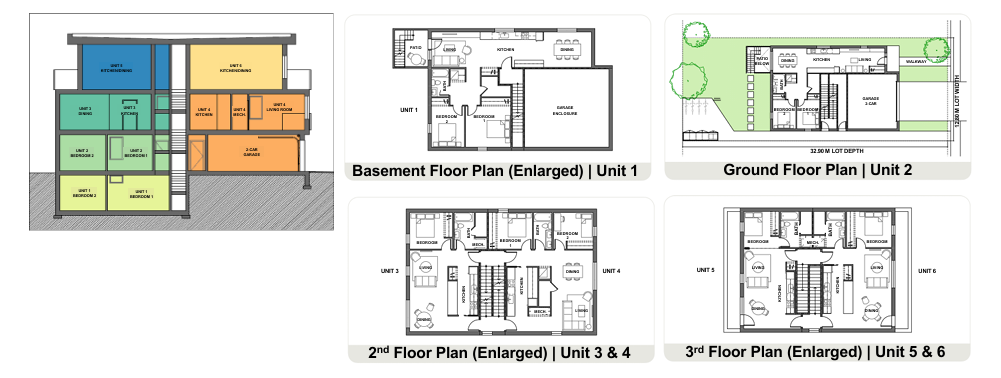
Wide Lots (12.8m width, 32.9m depth)

  • Building depth: 17m
  • Three storeys, with 6 units averaging 70m²
  • Includes two large (80m²) units
  • Up to two parking spaces in a garage
Wide Lot
Images Source: City of Toronto

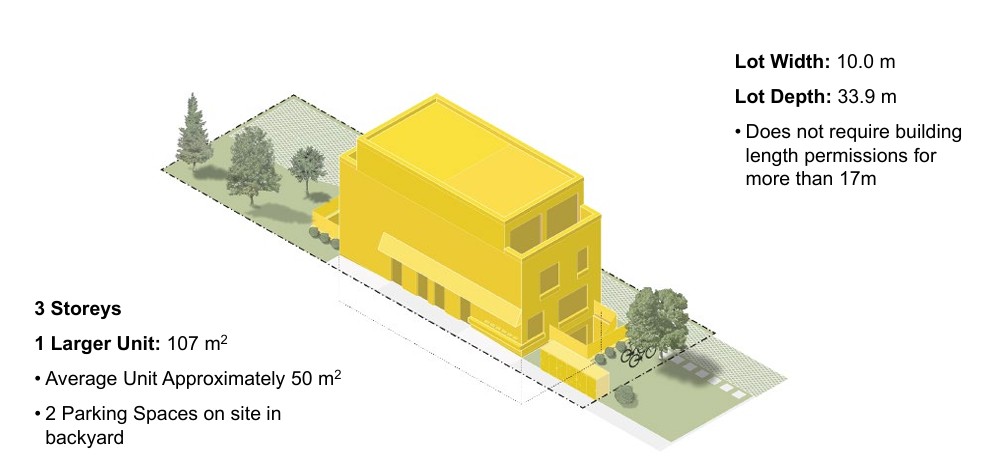
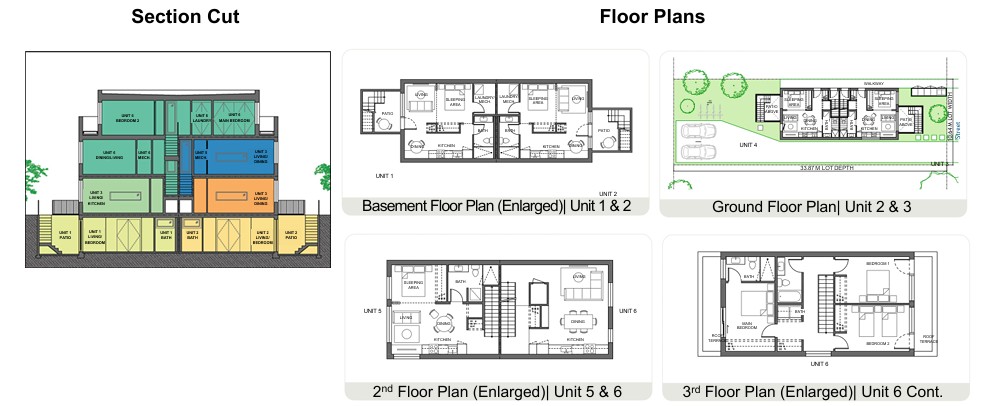
Mid-Width Lots (10m width, 33.9m depth)

  • Building depth: 17m
  • One large unit (107m²); remaining units average 50m²
  • Two backyard surface parking spots
   
nit Schematic in Wide Lot Context
Images Source: City of Toronto

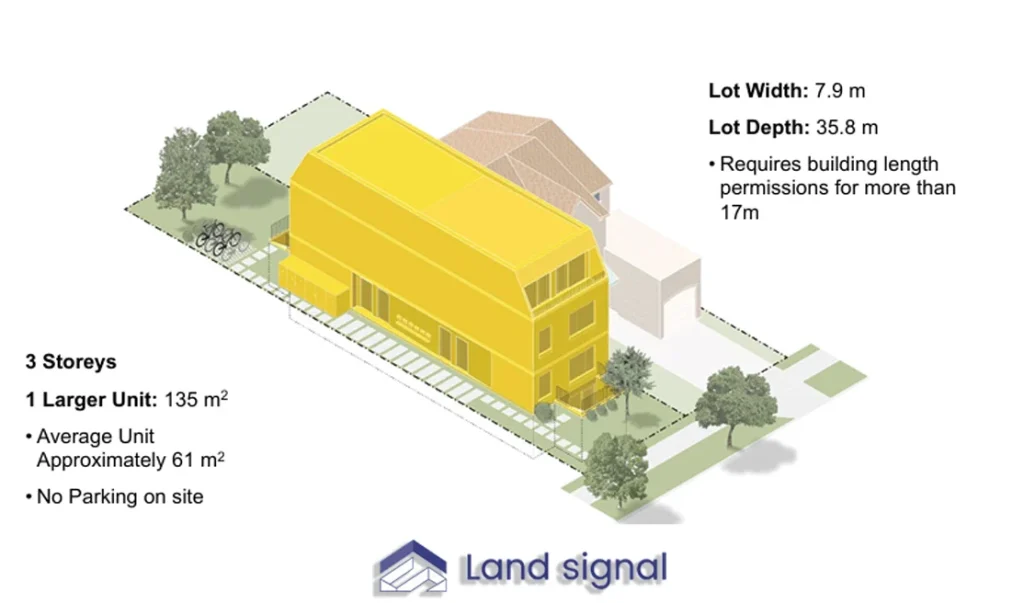
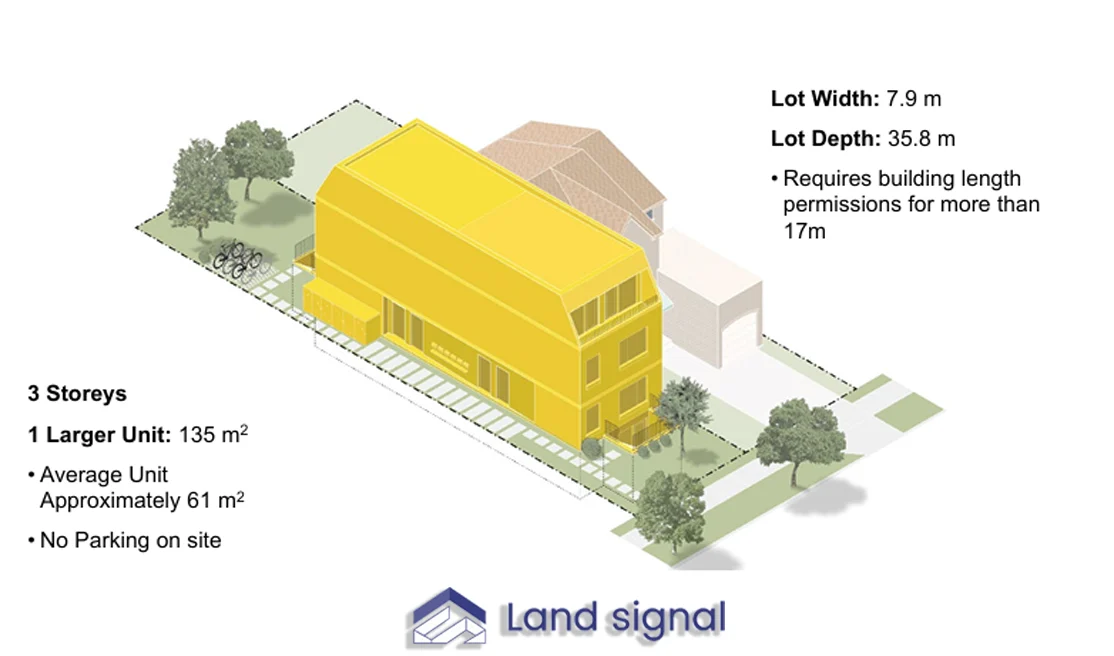
Narrow Lots (7.9m width, 35.8m depth)

  • Requires building depth over 17m
  • No parking on site
  • Compact design focused on maximizing interior livable space (units average 61m²)

All configurations promote natural light, efficient layouts, and spatial harmony with adjacent properties.

Parking Options Explored

Four parking arrangements were evaluated for sixplex suitability:

  1. Front-Integrated Garage: Included within the building
  2. Rear Surface Parking (Parallel): Along the driveway
  3. Rear Surface Parking (Perpendicular): In the backyard
  4. Rear Garage Structure: Not preferred due to reduced soft landscaping

These options provide flexibility based on lot width, access, and landscaping needs.

Parking
Images Source: City of Toronto

Understanding Lot Types & Zoning Implications

Understanding Lot Types & Zoning Implications
Images Source: City of Toronto

Whether you’re applying for a permit for house extension Toronto or evaluating the feasibility of a sixplex, understanding how your lot is classified is fundamental. Lot dimensions impact what can be built. Toronto classifies lots as:

Shallow Lots

  • <36m deep (under 10m wide) or <40m deep (10m+ wide)
  • Max building length: 17m

Deep Lots

  • ≥36m deep (under 10m wide) or ≥40m deep (10m+ wide)
  • Max building length: 19m

The City is exploring whether to grant shallow lots the same building lengths as deep lots, enabling consistent design standards across more properties.

Images Source: City of Toronto

What’s Next?

In the coming year, Toronto will continue refining its approach to ensure that sixplex expansion meets the needs of all stakeholders. This includes:

  • Finalizing performance standards for challenging lots (narrow, shallow, or irregular)
  • Exploring four-storey sixplex permissions on certain constrained sites
  • Evaluating impacts on local infrastructure, including water, sewer, and electrical systems
  • Modeling effects on school enrollment capacity, public services, and tree canopy preservation

City planners are also reviewing how sixplexes can meet affordability benchmarks and how policies might support incentive programs for building long-term rental units.

Design quality remains a priority. The City intends to encourage architectural variety, avoiding “cookie cutter” sixplexes and promoting context-sensitive façades and material choices. Aesthetic flexibility will help ensure these new buildings fit seamlessly into a range of urban and suburban contexts.

The final performance standards report is due by Q4 2025, and will inform zoning by-law updates aimed at simplifying building permissions while safeguarding neighborhood character and ecological resilience. In the coming year, Toronto will:

  • Finalize performance standards for challenging lot types
  • Assess feasibility of four-storey sixplexes, particularly on narrow lots
  • Analyze impacts on infrastructure, public services, tree canopy, and school capacity
  • Propose updates to the zoning by-law to modernize and streamline building types

The final performance report is expected by Q4 2025, paving the way for full-scale implementation.

Read Also: Toronto Multi Unit Property Conversion – Maximize Value Fast

How Land Signal Can Help

Whether you’re considering a basement permit Toronto for added living space, or preparing to submit a fourplex permit Toronto application to maximize your property’s rental yield, Land Signal supports every stage of the process. At Land Signal, we specialize in securing your Sixplex Permit Toronto with precision and ease. Whether you’re a homeowner looking to convert your lot or a developer interested in building future-ready housing, our team brings deep expertise to every step.

We provide:

We simplify the complex permit process so you can focus on building the housing Toronto needs.

Approved Wards for Sixplex Permit Toronto

For now sixplexes has been approved for

  • Ward-4: Parkdale- Highpark
  • Ward-9: Davenport
  • Ward-10: Spadina-Fort York
  • Ward-11: University-Yorkdale
  • Ward-12: Toronto-St Paul’s
  • Ward-13: Toronto center
  • Ward-14: Toronto-Danforth
  • Ward-19: Beaches-East York
  • Ward-23: Scarborough-North

Conclusion

Sixplexes are moving from policy concept to real, permitted buildings in parts of Toronto, with citywide standards following close behind. For owners and builders who understand the rules, that shift represents a rare chance to add several well planned units on a single lot while staying within a low rise, house scale envelope. A successful sixplex permit Toronto is not only about design; it is about matching your site, your budget, and your risk tolerance to the evolving multiplex framework.

From my perspective watching the municipal landscape, sixplexes are likely to become a normal part of Toronto’s low rise streets over the next decade. City planning is under constant pressure to deliver more housing, and higher performance codes will keep pushing projects toward thoughtful, efficient design. Owners who plan early for compliance, lean into standardized solutions where it makes sense, and treat zoning and building code work as core parts of the project, not afterthoughts, will be the ones whose sixplexes get built, stay durable, and hold their value as policy keeps evolving.

  1. City of Toronto. (2025). Expanding Housing Options in Neighbourhoods. Overview of laneway suites, garden suites, and multiplex permissions in low rise areas. Retrieved from https://www.toronto.ca/city-government/planning-development/planning-studies-initiatives/expanding-housing-options/
  2. City of Toronto. (2025). Multiplex Monitoring Program and Sixplexes Citywide Study. Technical background on Ward 23 six unit pilot and proposed citywide multiplex standards. Retrieved from https://www.toronto.ca/city-government/planning-development/planning-studies-initiatives/multiplex-housing/
  3. Canada Mortgage and Housing Corporation. (2025). Housing Design Catalogue – Sixplex Designs. Standardized six unit low rise building templates to support faster, code compliant construction. Retrieved from https://housing-infrastructure.canada.ca/housing-logement/design-catalogue-conception/index-eng.html

FAQ

Not yet. Multiplexes with up to four units are permitted across most low rise neighborhoods. Six unit permissions are fully in place only in Ward 23 as part of a pilot, while the Sixplexes Citywide Study is preparing the framework to extend similar rules citywide.

In some cases you can, but it depends on zoning, lot size, existing structure, and pilot coverage. Many houses will require additions, structural upgrades, or a partial rebuild to meet fire separation, exiting, and layout requirements for six units. A feasibility review by a design professional is essential before committing.


Current multiplex rules and sixplex study materials often assume no required parking, with the option to provide limited on site spaces if the lot can handle them while keeping enough soft landscaping. Final standards may vary by area, so you need to check your specific zoning once the sixplex rules are adopted.

In most cases, once a lot carries a full multiplex of five or six units, additional accessory dwelling units such as laneway or garden suites will not be permitted under standard additional residential unit rules. Those policies are typically capped at three units per lot and are separate from the multiplex zoning path. Any combination beyond six units would almost certainly require a custom planning and zoning strategy.

Farnaz Bigdeli

Farnaz Bigdeli, MBA, PMP is a Co-Founder at Land Signal and a Strategy and Innovation expert. She leverages her extensive background in Data Science, Architecture, and Business to simplify complex building codes and transform regulatory challenges into predictable, profitable strategies for the construction industry.

Get In Touch

"*" indicates required fields

Plan Smarter. Build Easier.

Whether you’re exploring an addition, a suite, or a full redevelopment, Land Signal provides zoning clarity and expert planning support tailored to your property.

Get In Touch

"*" indicates required fields

Want a Free 30-Minute Consultation

"*" indicates required fields

Psst! Did you know we’ve got our