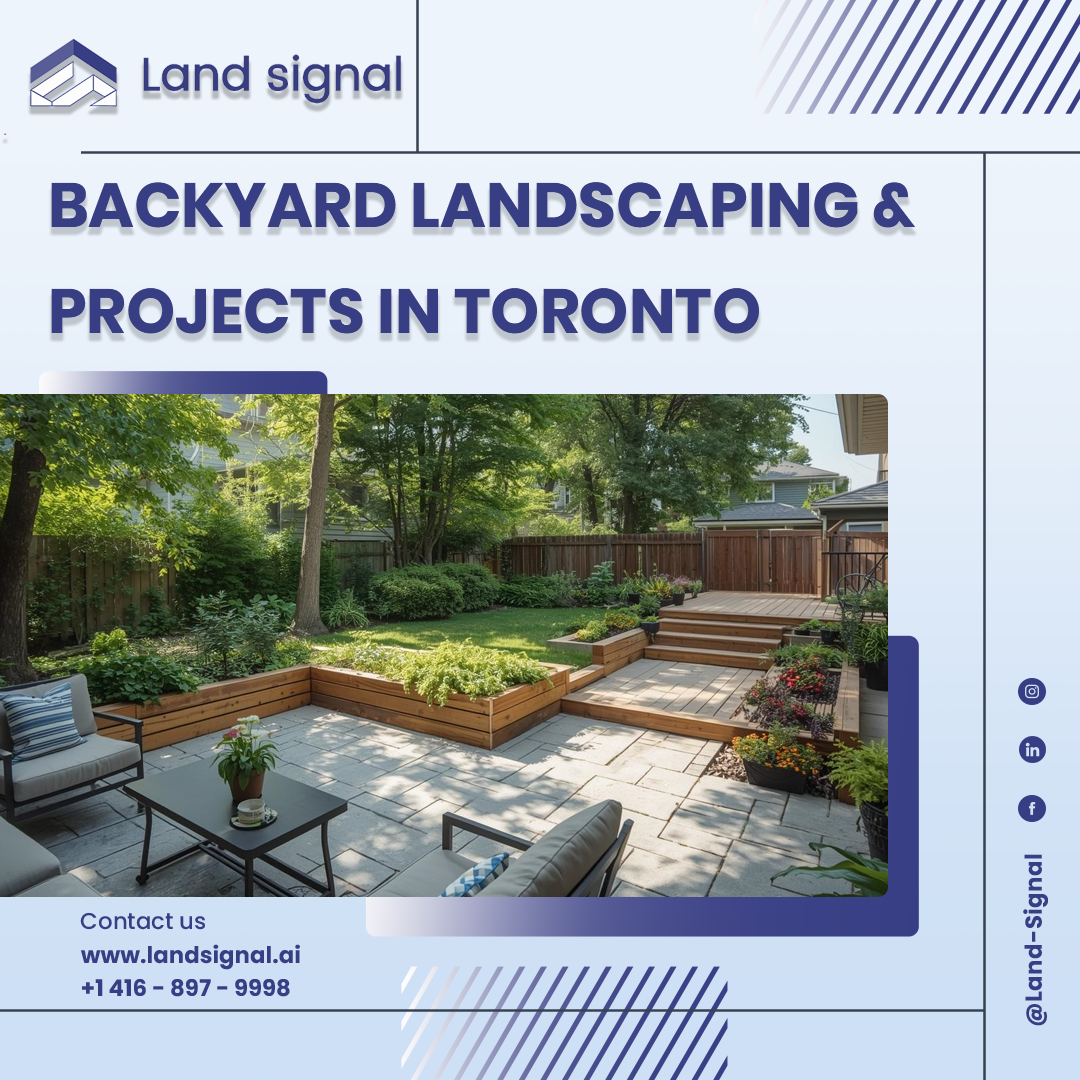










Your backyard can be more than an overlooked patch of grass. There are a lot of ways to make your backyard a valuable extension of your home, but it might be hard to decide what to do with it. As outdoor space becomes more cherished in Toronto’s busy life, homeowners want to invest in backyard landscaping and well-planned backyard projects more than ever.
If you’re ready for the transformation, we’ll guide you through your backyard project options in Toronto, what’s trending, and what practical considerations come into play.
Start Your Project with Confidence
At Land Signal, we assist with construction and renovation permits, as well as Garden House and Laneway Suite designs. Let our experts guide you through every step.
Top Backyard Projects and Landscaping Trends for 2026
Here are some of the most popular backyard projects that Toronto homeowners are focusing on in 2026:
Modular & Multi-Purpose Spaces
Modular gazebos and pergolas with interchangeable panels are growing in popularity, as they allow homeowners to adapt their space throughout the year.
Mesh panels are great in summer and clear wind panels are good in the cooler months. You can also use them as yoga studios, home offices or dining areas.
Integrated Outdoor Kitchens
Nowadays, you’ll find weather-resistant cabinetry, refrigerators, prep areas, and modular cooking islands in modern designs.
These setups encourage more time outdoors and turn the backyard into a proper gathering space.
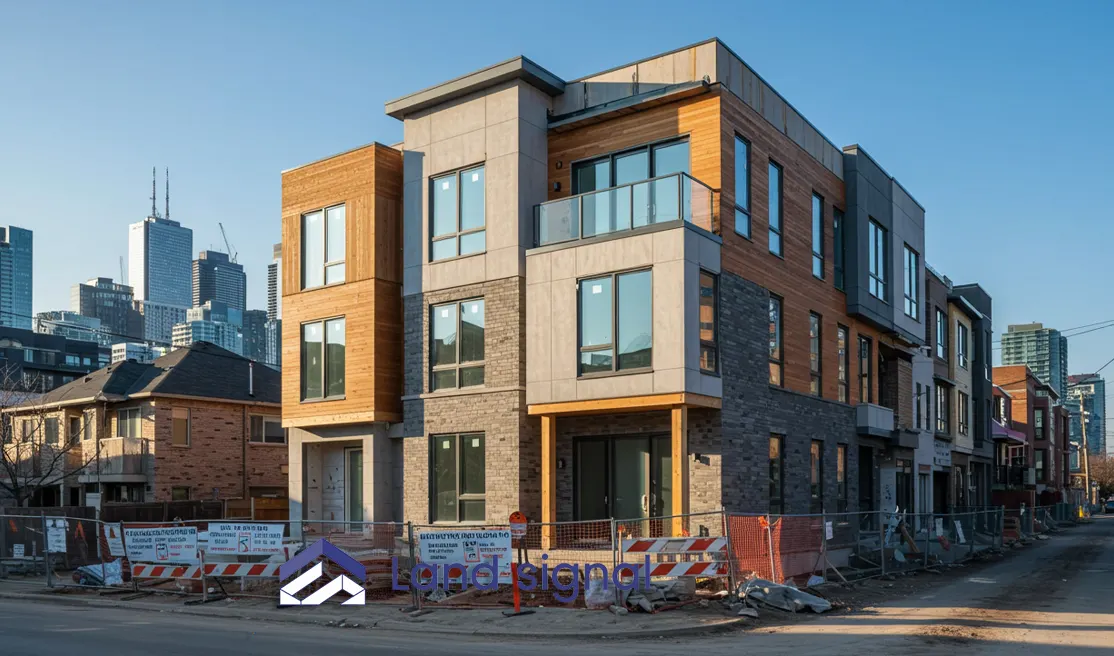
Garden Suites
You can usually have these self-contained units in most residential zones, and they’re great for family members or for renting out.
The 2026 guidelines have been updated to allow for two-storey garden suites up to 6.3 metres high, as long as they’re at least 7.5 metres from the main house.
Read Also: Maximum Dimensions for Garden Suites in Toronto
Low-Maintenance Hardscaping
Interlocking pavers, composite decking and stone retaining walls are all popular with homeowners who want to cut down on lawn care.
These materials help to create outdoor spaces that feel like rooms, and are great for using all year round.
Biophilic & Native Design
There’s a growing focus on landscaping that works with nature rather than against it. Native Ontario plants like Purple Coneflower, Serviceberry, and Wild Columbine are being used to help out our pollinators and cut down on water usage.
What Defines Backyard Landscaping
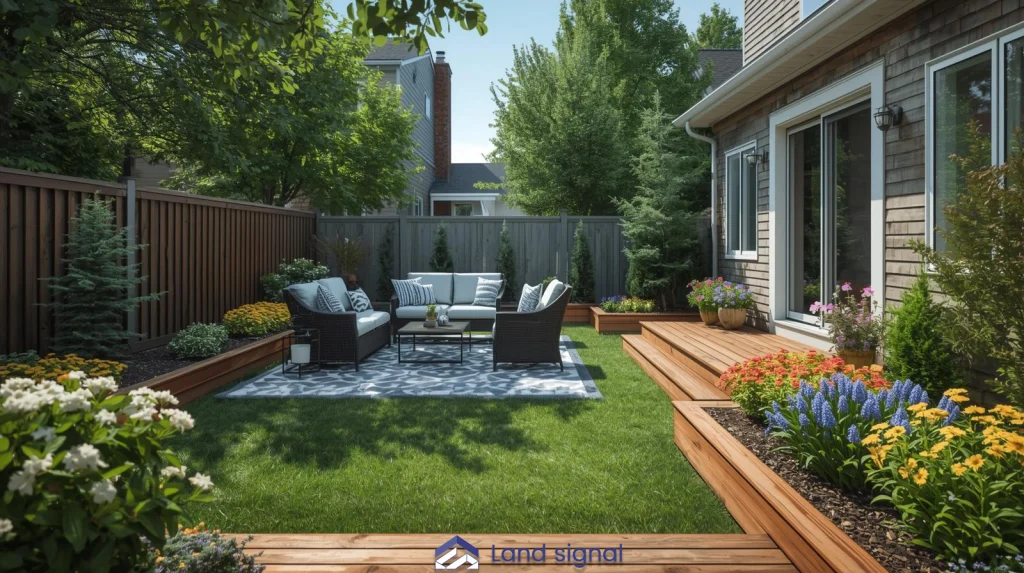
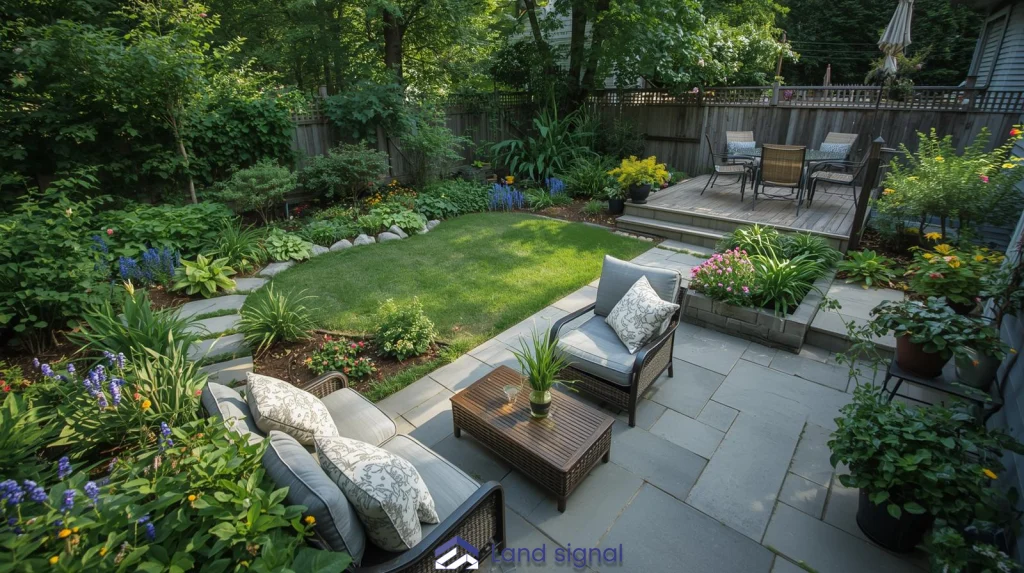
Backyard landscaping is the practice of designing and enhancing your background space so it functions as a cohesive, usable space. It typically includes:
- Hardscaping, like patios, walkways, retaining walls, and decks, which provide structure and durability.
- Softscaping elements like plants, trees, lawns, and garden beds add texture, shade, and seasonal interest.
- Functional zones define how the backyard is used, like for dining, relaxing, gardening, working, or entertaining.
Do You Need a Permit for Background Projects?
Not all backyard work needs a permit, but some projects do. Simple landscaping changes usually don’t need a permit, but structures like decks above a certain height, garden suites, or permanent enclosures might.
It’s really important to understand the difference between cosmetic landscaping and structural work. If you check the city guidelines early on, you can avoid delays, redesigns and costly corrections down the line, especially for larger backyard projects.
In general, you need a permit if:
- The structure goes beyond a certain height
- It’s a garden suite
- Permanent enclosures are includedga
Read Also: Landscaping Requirements for Homes and Laneway Suites in Toronto
How Land Signal Helps Homeowners Plan Backyard Landscaping & Projects in Toronto
Land Signal helps homeowners plan backyard landscaping and outdoor construction projects in Toronto by clarifying zoning rules, permit requirements, and feasibility before work begins. Our team supports backyard projects by providing:
- Zoning and permit guidance for decks, garden suites, outdoor structures, and permanent backyard features
- Early feasibility insights to determine which backyard projects require approvals and which do not
- Support with permit documentation when landscaping includes structural or built elements
- Cost planning assistance using tools like our construction cost estimator to help homeowners budget effectively
Whether you’re planning a landscaped retreat, an outdoor kitchen, or a larger backyard project, Land Signal helps you understand requirements, avoid delays, and move forward with confidence from the start.
Read Also:
Conclusion
Now, backyards are so much more than just an outdoor extension. They’re functional spaces that really impact how we live at home. If you take the right approach to your backyard landscaping, you can turn even a small outdoor space into something that’ll last and be ready for the future.
With trends for 2026 focusing on adaptability, sustainability, and multi-use design, it’s a great time to plan a backyard project in Toronto that will be fun now and add value down the line.
Sources
- City of Toronto. (2025). Garden Suites Background Report. A detailed municipal report outlining policy context, research findings, and recommendations for garden suite implementation in Toronto. Retrieved from https://www.toronto.ca/legdocs/mmis/2025/ph/bgrd/backgroundfile-256978.pdf
- City of Toronto — 311 Toronto at Your Service. (n.d.). Service Information on Building Permits and Related Services. Provides practical guidance on how to access city services, including where to start with building permits and permit-related questions. Retrieved from https://www.toronto.ca/home/311-toronto-at-your-service/find-service-information/article/?kb=kA0Vt000000CHQ5KAO&
- City of Toronto. (2022). Garden Suites Summary of Rules — February 2022. Summarizes key regulations and requirements for garden suite development in Toronto, offering clarity on sizing, placement, and design standards. Retrieved from https://www.toronto.ca/wp-content/uploads/2022/02/9320-cityplanning-garden-suites-summary-of-rules-Feb2022.pdf
- City of Toronto. (n.d.). Expanding Housing Options. Official overview of the city’s strategy to broaden housing choices, including laneway and garden suites, to address affordability and increase residential diversity. Retrieved from https://www.toronto.ca/city-government/planning-development/planning-studies-initiatives/expanding-housing-options/
FAQ
On average, the permit approval process takes 2 to 4 months, but can take longer depending on the complexity of the design and city workload.
For lots with a frontage greater than 6.0 metres, at least 50% of the rear yard area must be soft landscaping (vegetation/permeable surfaces). For a frontage of 6.0 metres or less, a minimum of 25% is required.
Yes, a building permit is required. The proposed garden suite must comply with all applicable zoning bylaws, the Ontario Building Code, and tree preservation regulations.