Why Strong Foundation Walls Matter in Toronto Every home in Toronto stands on a foundation that silently carries its full weight. Yet most homeowners only think about foundation walls when cracks show up, water leaks in, or a renovation opens...
Content Management Team
Lorem ipsum dolor sit amet, consectetur adipiscing elit. Ut elit tellus, consectetur adipiscing elit.
Concrete Foundation Walls in Toronto: Types, Benefits, and Common Issues
Why Strong Foundation Walls Matter in Toronto
Every home in Toronto stands on a foundation that silently carries its full weight. Yet most homeowners only think about foundation walls when cracks show up, water leaks in, or a renovation opens the ground. Poorly built or improperly waterproofed concrete walls can lead to costly structural failures, basement...
Farnaz Bigdeli, MBA, PMP, co-founder of Land Signal, specializes in applying data science and strategic foresight to decode complex building regulations and optimize project profitability.
Amir M. Khazaneh, P.Eng., COO/CEO of Land Signal, is a Professional Engineer specializing in construction management and rigorous site supervision to minimize project delays.
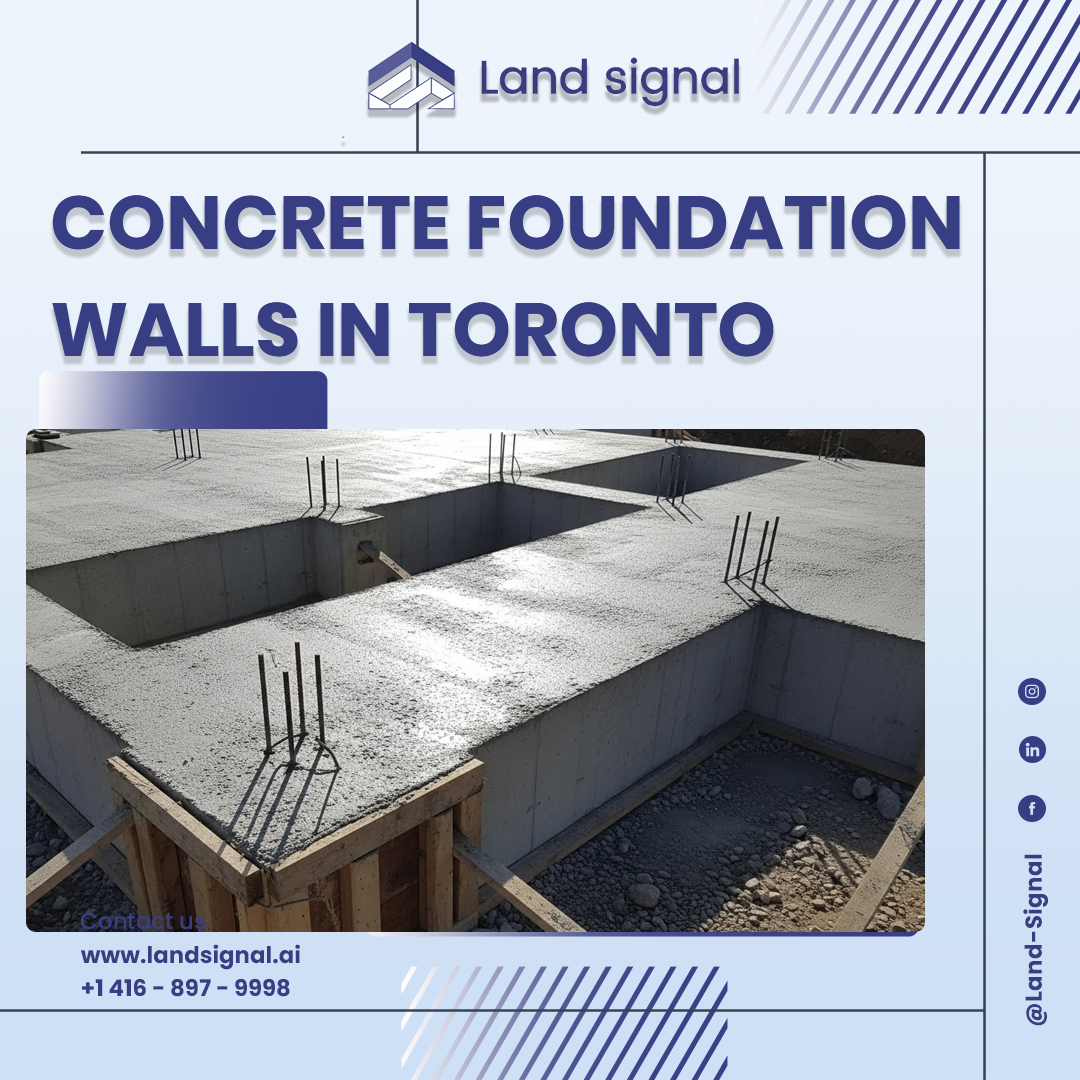
Every home in Toronto stands on a foundation that silently carries its full weight. Yet most homeowners only think about foundation walls when cracks show up, water leaks in, or a renovation opens the ground. Poorly built or improperly waterproofed concrete walls can lead to costly structural failures, basement flooding, and major reduction in property value. Understanding how concrete foundations are built and maintained is essential if you are planning a new home, a laneway suite Toronto project, or an addition that requires deeper footings. This guide breaks down how foundation walls are built in Toronto, what materials are used, and how common issues are repaired based on Ontario Building Code standards and professional construction practices.
Start Your Project with Confidence
At Land Signal, we assist with construction and renovation permits, as well as Garden House and Laneway Suite designs. Let our experts guide you through every step.
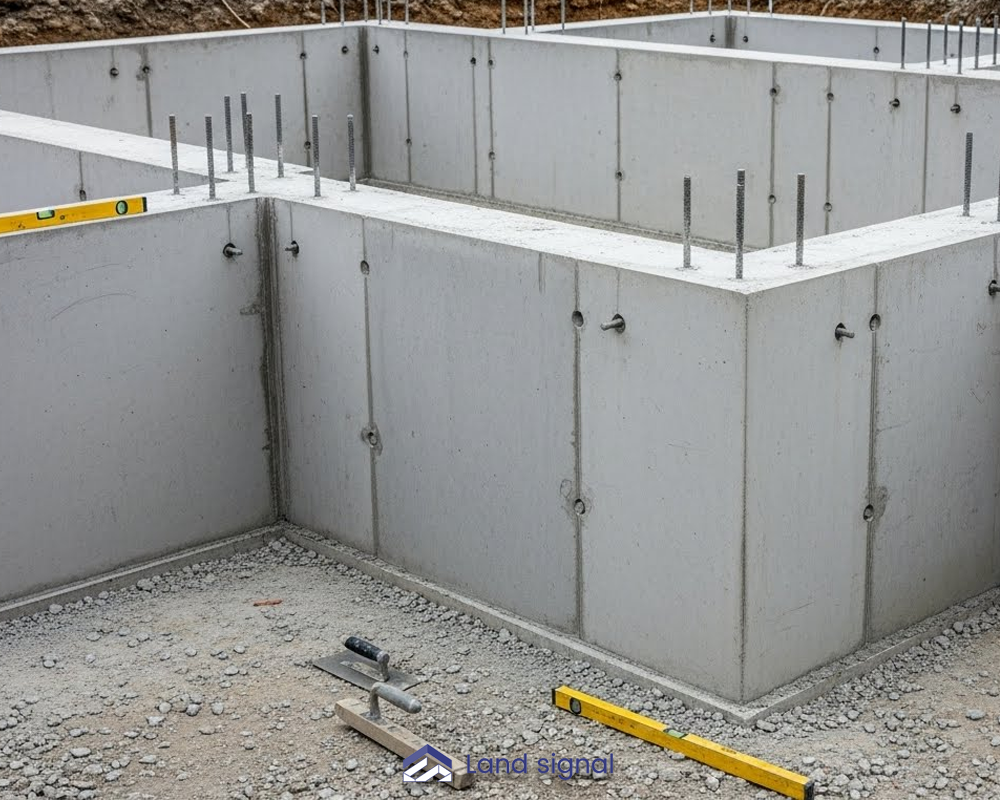
Poured concrete walls are the most common option for new homes and additions. They are formed on-site and offer strong structural integrity with better resistance against lateral soil pressure. Typical thickness ranges from 6 to 10 inches depending on load and soil conditions. Benefits include:
Stronger structural performance
Minimal joints that reduce water penetration
Best choice for deep basements and taller walls
This option is preferred in modern custom builds and larger extensions such as a second floor addition Toronto.
Concrete Block (CMU) Walls
Concrete block walls are popular for certain layouts where customizing shapes and corners is required. Blocks may be filled with grout or reinforced with rebar for strength. They are popular because:
Ideal for complex shapes or additions
Potentially more cost-effective
Can provide good insulation when reinforced and filled
However, they require extra structural reinforcement to meet Ontario Building Code standards for lateral soil pressure.
Precast Concrete Panels
Precast walls, including systems like Superior Walls, are manufactured off-site in controlled factory conditions, then transported and installed quickly. Benefits include:
Higher precision and quality control
Fast installation
Energy-efficient options available with insulation
These systems are becoming popular in modern residential builds and garden suite design Toronto.
Key Requirements for Toronto Foundation Walls
Ontario Building Code Compliance
The OBC outlines minimum wall thickness, footing design, reinforcement, and drainage requirements. For example:
Minimum thickness for block walls: 150–300 mm depending on wall height and loads
Footings must extend below frost depth (approx. 4 ft)
Engineers may be required to stamp drawings for larger or complex structures
Soil Preparation and Frost Protection
Toronto has frost depths reaching approximately 4 feet. Proper excavation and soil compaction are necessary to prevent foundation shifting. Engineers often require soil bearing tests before excavation begins.
Waterproofing and Drainage
A foundation is only as durable as its water management. Essential components include:
Exterior waterproof membranes
Weeping tile (drainage pipe) around the footing
Gravel drainage layer
Vapor barriers
Sump pumps in many areas
Common Foundation Repairs in Toronto Homes
Homeowners and property investors often encounter:
Cracks from settlement or water pressure
Bowed or leaning walls due to soil loads
Basement leaks and moisture ingress
Professional solutions include:
Epoxy injection for structural crack sealing
Carbon fiber straps for bowed or weakened walls
Underpinning to strengthen or lower the foundation for basement renovations
Exterior drainage upgrades to stop recurring water problems
These repairs are essential especially before applying for a legal basement permit Toronto or finishing a new basement space.
How to Choose Foundation Contractors in Toronto
When hiring a contractor, homeowners should check for:
Proven experience with code-compliant builds
Expertise in excavation, forming, pouring, and waterproofing
Warranty on structure and waterproofing
Reviews specific to basements and foundation work
Liability insurance and WSIB coverage
A qualified contractor will also work alongside engineers when structural reinforcement or repair is required.
How Land Signal Helps Toronto Homeowners
Land Signal guides homeowners, builders, and developers through all building permit requirements related to foundation work, including additions, basements, and new construction. Our team assists with:
Whether planning a home addition, a laneway suite, or excavation for a deeper basement, our experts make the permit process faster, accurate, and stress-free.
Conclusion
A durable foundation wall is more than concrete. It is a combination of proper materials, Ontario Building Code-compliant construction, frost protection, and waterproofing to withstand Toronto’s soil and climate conditions. Well-designed and well-built foundations significantly increase home value, prevent structural damage, and reduce repair costs over time. Professional assessment is always recommended before building or repairing a foundation. Engineering evaluation, soil studies, and code-compliant construction ensure long-term stability. Investing in the right foundation today protects your investment for decades.
Not always. Poured concrete provides greater strength, but block systems may be useful in complex layouts or certain budget situations when properly reinforced.
Yes, they follow OBC standards including frost depth footings and drainage, even for small or detached structures.
Farnaz Bigdeli
Farnaz Bigdeli, MBA, PMP is a Co-Founder at Land Signal and a Strategy and Innovation expert. She leverages her extensive background in Data Science, Architecture, and Business to simplify complex building codes and transform regulatory challenges into predictable, profitable strategies for the construction industry.
Get In Touch
"*" indicates required fields
Plan Smarter. Build Easier.
Whether you’re exploring an addition, a suite, or a full redevelopment, Land Signal provides zoning clarity and expert planning support tailored to your property.