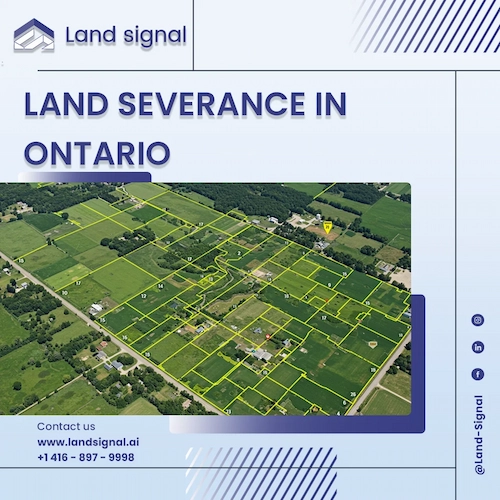











Land severance, the legal process of dividing a single property into two or more separate parcels, is a complex undertaking governed by provincial legislation and municipal regulations. In Ontario, this process is regulated by the Planning Act and overseen by local municipalities. Within the City of Toronto, land severance applications are subject to the city’s Official Plan, zoning bylaws, and the decisions of the Committee of Adjustment.
Successfully navigating land severance requires a deep understanding of Official plan, planning requirements, zoning by-laws, municipal approvals, and permit requirements. Land Signal specializes in helping property owners through every stage of the severance process, from assessing feasibility to obtaining necessary permits. Whether you’re looking to maximize your property’s potential or create new development opportunities, our expert team ensures a smooth and compliant severance process.
This guide explores the land severance process in Ontario, focusing on the unique challenges of lot severance in Toronto. It covers key legal frameworks, procedural steps, potential obstacles, and costs, helping property owners make informed decisions—whether to increase property value, create development opportunities, or optimize land use.
What is Land Severance in Ontario?
Land severance in Ontario refers to the legal division of a single parcel of land into two or more distinct lots. This process is governed by the Planning Act, which delegates authority to municipalities to oversee and regulate land severance applications within their jurisdictions.
The Act aims to ensure that land divisions are consistent with planned growth, environmental protection, and the provision of adequate municipal services. A severance is required whenever a property owner intends to create a new lot, whether for sale, development, or personal use.
It’s important to distinguish between a severance and a subdivision. While both involve dividing land, a subdivision typically creates multiple lots, often for a planned development or community, and involves a more complex and extensive approval process.
Severances, on the other hand, are generally for creating a smaller number of lots, often one or two, and typically involve less complex procedures. Understanding the distinction between these two processes is critical for choosing the correct application path. Failing to obtain the necessary approvals for a severance can result in legal penalties and complications with property ownership.
The Process of Land Severance in Ontario
The land severance in Ontario process involves several key stages, each requiring careful attention to detail and adherence to specific regulations. Navigating these stages effectively is essential for a successful application.
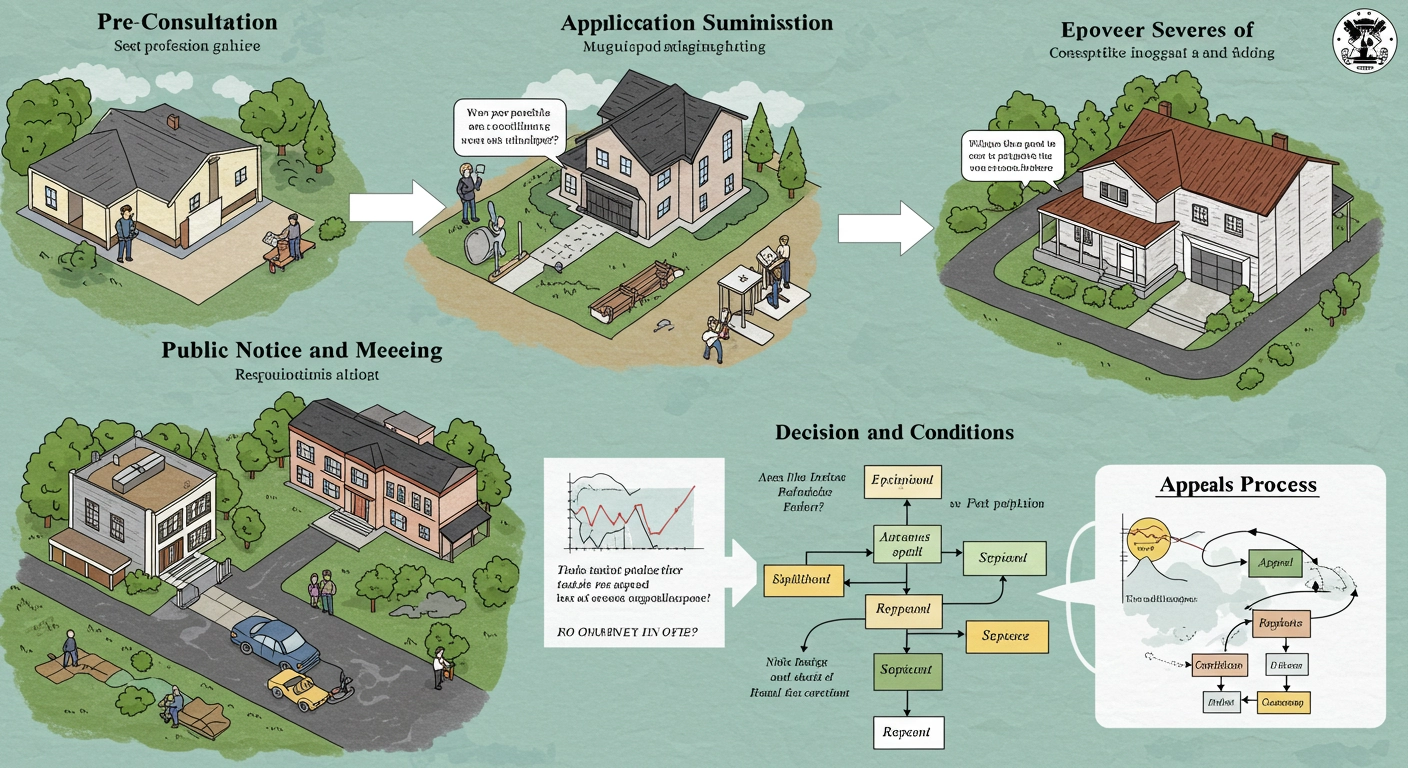
Pre-Consultation
It is strongly recommended that applicants meet with the municipal planning department before submitting a land severance application. This pre-consultation session enables applicants to review zoning requirements, servicing conditions and environmental considerations with planning staff.
This step helps to identify potential issues early on and avoid costly delays or revisions at a later stage. In many cases, applicants provide a preliminary concept plan in order to receive initial feedback before making a formal application.
Read Also: Home Building Cost Calculator Ontario
Application Submission
Following the pre-consultation stage, the formal application is submitted to the Committee of Adjustment. This must include all the necessary documentation, such as surveys, site plans, elevations and supporting technical reports.
Accurate and complete information is essential. Incomplete applications may be rejected, causing delays. Applicants must carefully follow municipal guidelines and ensure that all required fees are paid.
Public Notice and Meeting
Once the application has been deemed complete, the municipality will issue a public notice. A sign is usually posted on the property and letters are sent to nearby property owners, typically within a 200-foot radius.
A public meeting is then scheduled, during which neighbors can express their concerns and the applicant can present their proposal. The Committee of Adjustment considers public input when making its decision. Applicants should be prepared to answer questions clearly and professionally.
Decision and Conditions
After the pre-consultation stage, the formal application is submitted to the Committee of Adjustment. This must include all the necessary supporting documentation, such as surveys, site plans, elevations and technical reports.
Accurate and complete information is crucial. Incomplete applications may be rejected or causing delays. Applicants must carefully follow municipal guidelines and ensure that all required fees are paid.
Appeals Process
If the application is rejected or the applicant disagrees with the conditions of approval, there is an appeals process available. Appeals are typically made to the TLAB (Toronto local appeal body) in Toronto area and (OLT) Ontario land tribunal independent provincial body that reviews land use planning decisions.
The appeals process involves submitting a formal appeal to the LPAT within a specified timeframe, outlining the grounds for the appeal and providing supporting evidence. They will review the appeal and may hold a hearing to consider the arguments presented by the applicant and the municipality. The OLTs decision is binding, and there are limited options for further appeals.

Common Challenges in Land Severance in Ontario and How to Address Them
Several common challenges can arise during the lot severance in Toronto process. Understanding these challenges and developing strategies to address them is essential for a successful application.
- Zoning and Land Use Restrictions: Zoning bylaws may limit lot size, frontage, or permitted uses, which can affect severance feasibility. This may require applying for a minor variance or adjusting the proposal to comply with existing zoning regulations.
- Committee of Adjustment Rejections: Applications may be denied if they do not meet planning criteria. Addressing this may involve revising the proposal to respond to concerns or appealing the decision to the Ontario Land Tribunal.
- Opposition from Neighbors and Community Groups: Nearby property owners may raise concerns about traffic, density, or neighborhood impact. Since notices are sent to properties within a 200-foot radius and adjacent owners’ opinions carry weight, early communication with neighbors can help address concerns before the hearing.
- Heritage and Environmental Restrictions: Properties located in heritage districts or environmentally sensitive areas may require additional studies or approvals. Consulting specialists and adjusting the proposal to minimize impacts can improve approval chances.
How Land Signal Can Support Your Land Severance Application
Land severance in Ontario requires more than submitting forms. It demands a clear understanding of zoning bylaws, municipal planning policies, servicing requirements, and community considerations. Even a small oversight can lead to delays, added costs, or rejection.
At Land Signal, we assess your property’s severance potential before you apply. Our team evaluates zoning compliance, identifies potential obstacles, prepares complete application packages, and represents you through the Committee of Adjustment process.
From initial feasibility review to final approval, we help you navigate each stage with clarity and confidence.
If you’re considering severing your property, contact Land Signal for a professional assessment and a structured path forward.
Conclusion
Land severance in Ontario is a structured planning process governed by municipal policies and provincial legislation. While it can unlock development potential or create financial opportunity, approval depends on zoning compliance, servicing availability, and broader planning objectives.
From experience, the most successful severance applications are those prepared with clear understanding of local policies and realistic expectations. Early consultation with planning staff and qualified professionals significantly improves the likelihood of approval and avoids costly delays.