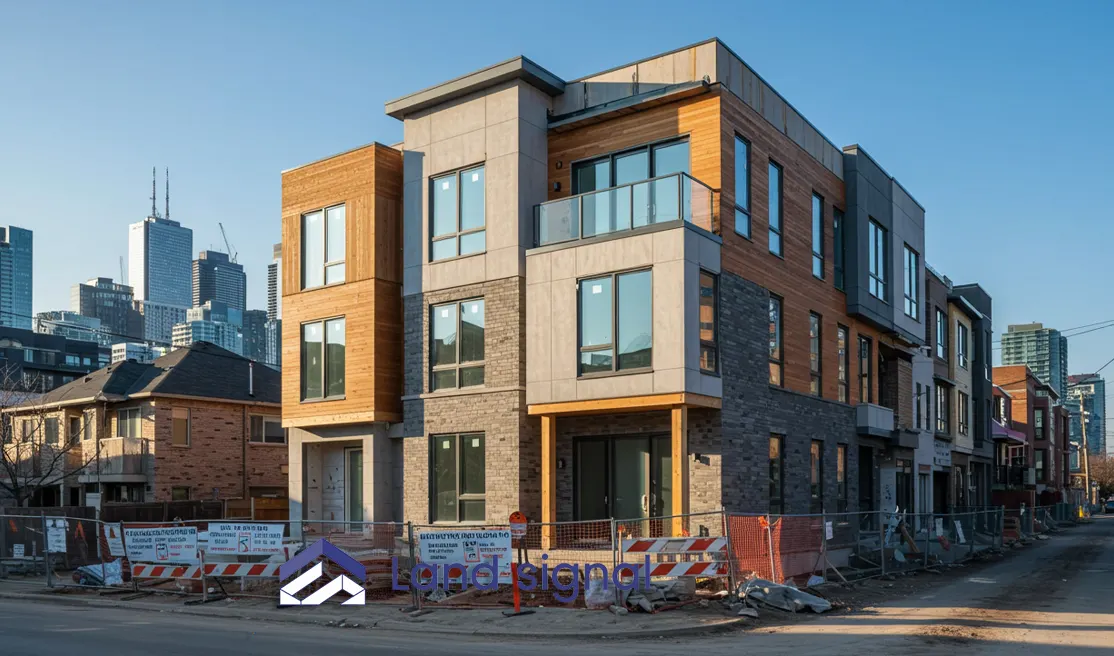







Now that the rules have opened up more options than before, a new question arises: how many units can you build on your lot in Toronto? Depending on where your property is and what kind of access it has, you may be able to build more than a single detached home.
In many parts of the city, up to four+1 units are allowed as-of-right (without paying development charges) on residential lots, while some areas now allow up to six. On top of that, garden suites and laneway suites can create additional housing opportunities in the rear of the property. Before making plans, though, it’s important to understand how these permissions work and what requirements still shape what you can build.
Start Your Project with Confidence
At Land Signal, we assist with construction and renovation permits, as well as Garden House and Laneway Suite designs. Let our experts guide you through every step.
Fourplex Permission: Citywide Zoning Allows Up to Four Units
In most cases, homeowners are permitted to build up to four units. The City permits duplexes, triplexes, and fourplexes on properties in residential zones such as:
- R
- RD
- RS
- RT
- RM
That doesn’t mean every lot can automatically fit four units in the same way. What it does mean is that zoning now supports low-rise multi-unit housing much more broadly across the city than it used to.
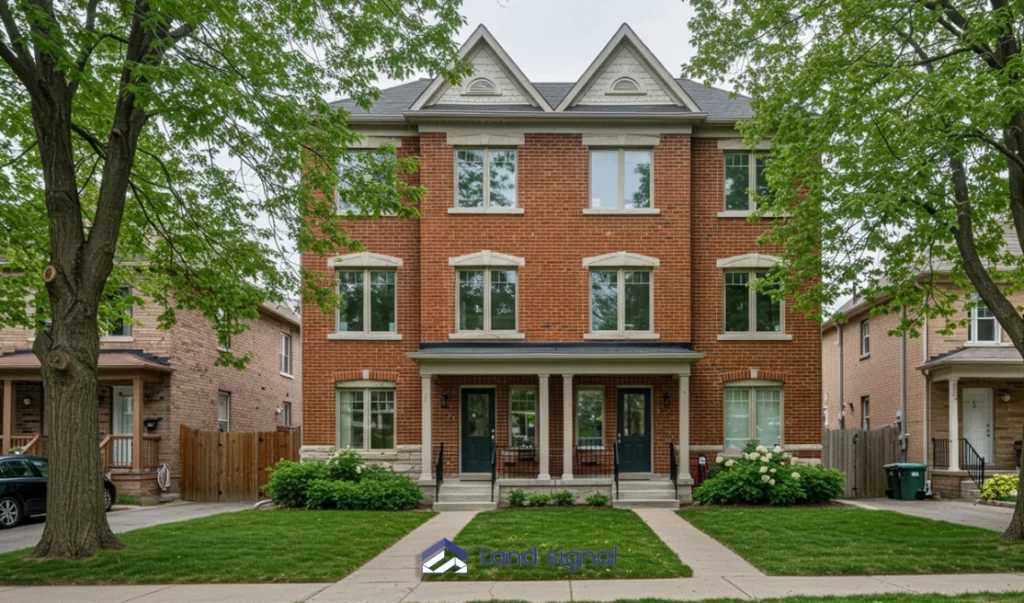
Sixplex Zones: Some Areas Allow Up to Six Units
In some parts of Toronto, the number goes higher. The City says up to six units are now permitted in
- Toronto wards 4,9,10,11,12,13,14
- East York District, ward 19
- Scarborough, Ward 23
At the same time, the City is also studying whether five and six unit permissions should expand citywide. So while sixplexes aren’t permitted across Toronto today, they have transformed from an idea to reality in certain districts.
Read Also : Toronto Fiveplex and Sixplexes Explained
Size Limits Still Shape What You Can Build
The number of units is only part of the picture. Even if the zoning regulations permit four or six units, the building must still comply with height, setback, access and site coverage rules. The City’s sixplex study materials describe permissions for detached multiplexes of up to four storeys being reviewed, and City materials for multiplex monitoring also reference base height permissions of 10.0 metres in some residential zones.
This is where many homeowners encounter difficulties. While a plot may technically allow multiple units, this doesn’t necessarily mean that the site can physically support them in a practical or compliant way. Some factors can affect the final outcome, such as:
- Lot size
- Frontage
- Tree constraints
- Servicing
- Building depth
- Rear yard conditions
In other words, the number of units that can be built on paper and the number that can be built on your actual lot aren’t necessarily the same.
Additional Units: Garden Suites and Laneway Suites
In addition, Toronto allows detached garden and laneway suites in the rear yard. Garden suites Toronto are generally permitted on most residential properties in Toronto, while laneway suites are allowed on eligible lots backing onto a public laneway. The city provides pre-approved plans for both types to simplify the permit process.
However, there is an important limit. Each lot can have a maximum of one ancillary building containing either a garden or laneway suite, but not both. While these options can increase the number of homes on a property, there are still rules about how many separate backyard units are permitted.
What Requirements Still Matter?
You still have to deal with the practical side of approvals, even if the permissions are broader. Some of the main things that still matter include:
- Your zoning category and whether your property is in an area that allows four or six units
- Whether the lot has laneway access if you’re considering a laneway suite
- Height, setbacks, building depth, and other built form controls
- Servicing, access, and site conditions
- Whether your plans fit the Ontario Building Code and the City’s permit requirements
How Land Signal Supports Multiplex, Garden Suite, and Laneway Suite Approvals in Toronto
Understanding how many units you can build on your lot in Toronto involves more than knowing the headline zoning changes. While many residential properties now allow up to four units as-of-right, and some areas permit up to six, homeowners still need to navigate zoning rules, built form controls, servicing requirements, and permit approvals before moving forward. Land Signal helps property owners make sense of these opportunities by supporting:
- Zoning and land use analysis to confirm how many units your lot may realistically support based on its location, frontage, lot size, access, and applicable residential zoning category
- Guidance on multiplex development potential, including fourplex and sixplex permissions, built form requirements, and site-specific development constraints
- Support for garden suite and laneway suite planning, including eligibility review, access considerations, and compliance with City requirements for ancillary backyard housing
- Coordination with architects, planners, and other consultants to help ensure your plans meet Toronto zoning bylaws, building code requirements, and permit submission standards
- Assistance with development approvals and permit applications so you can move from initial feasibility to a compliant, buildable project with greater clarity and confidence
Whether you’re exploring a fourplex, assessing sixplex potential, or considering a garden or laneway suite on your property, Land Signal helps simplify the approval process and identify what your lot can realistically accommodate.
Contact our team today for expert guidance and a smoother path from feasibility to approval.
Conclusion
As of today, the answer to our question “how many units can you build on your lot in Toronto?”, in many cases, is four. In parts of Toronto wards 4,9,10,11,12,13,14, East York and part of scarborough Ward 23, however, it may be up to six. Depending on the property, adding a garden or laneway suite could present another opportunity.
However, the real answer always depends on more than just the headline number. Zoning permissions are only the starting point. The lot itself, the built form rules and the approval process all play a significant role in determining what is actually possible.
I believe for homeowners considering redevelopment or adding housing, the smartest first step is to look beyond the unit count and understand what their property can realistically accommodate.
FAQ
Sixplexes are now permitted in certain areas of the city wards 4,9,10,11,12,13,14,19,23. Development charges are waived for up to six units and the ‘missing middle’ housing initiative is changing what can be built on residential plots. However, before you start designing a six-unit building, take a step back.
- Development Charges: As of 2026, development charges are fully waived for multiplexes with up to six units, potentially saving owners hundreds of thousands of dollars per project.
- Financing: Projects with 1–4 units usually qualify for standard residential mortgages.
- For new construction more than 4 units on same lot there are available funds from CHMC with up to 50 years amortization and lower intrest rates
- Height: Multiplexes are generally permitted up to a height of 10 metres (33’), which typically supports a three-storey building.
- Depth: For “deep” lots, the maximum building depth is increased to 19 metres(62’).
- Floor Space Index (FSI): New multiplex legislation has largely eliminated FSI maximums, moving toward “form-based” zoning that focuses on physical dimensions rather than a density ratio.
- Parking: Small multiplexes (up to fourplexes) and backyard suites are not required to provide vehicle parking spaces, though bicycle parking is often mandatory.
Sources
- City of Toronto. (2024). City of Toronto Zoning By-law 569-2013, as Amended (Office Consolidation). Outlines current zoning rules for residential apartment zones, including permitted uses, dwelling types, lot requirements, and secondary suite provisions. Retrieved from https://www.toronto.ca/zoning/bylaw_amendments/ZBL_NewProvision_Chapter15_10.htm
- Re-Housing the Yellowbelt. What Can You Build. Provides an accessible overview of housing types and development options that may be allowed on residential lots under current Ontario and municipal housing rules. Retrieved from https://rehousing.ca/What-can-you-build
- NovaCon Construction. How Many Dwellings Can I Build on a Single Lot in Ontario? Explains how Ontario’s updated housing rules affect the number of dwelling units that may be permitted on a single residential lot, with practical context for homeowners and builders. Retrieved from https://novacon.ca/how-many-dwellings-can-i-build-on-a-single-lot-in-ontario