







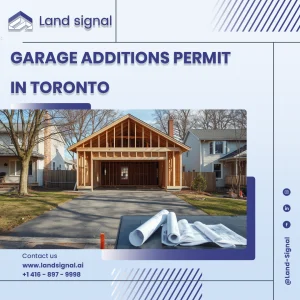
Does the right size for a home depend on square footage, or daily needs? Is it a good idea to make your decision based on either of those factors? There’s a lot to consider afterall: how well the space functions for your family, how the home fits on the lot, and whether the design supports the way you want to live. In Toronto, this decision becomes even more important because lot sizes, neighbourhood conditions, and zoning bylaws can all affect what is realistically possible.
In this blog, we’ll look at the main factors that determine the right size for a custom home in Toronto, including lot constraints, lifestyle needs, design mistakes to avoid, and practical tips for making the best decision.
Start Your Project with Confidence
At Land Signal, we assist with construction and renovation permits, as well as Garden House and Laneway Suite designs. Let our experts guide you through every step.
How Lot Constraints and Bylaws Affect Home Size
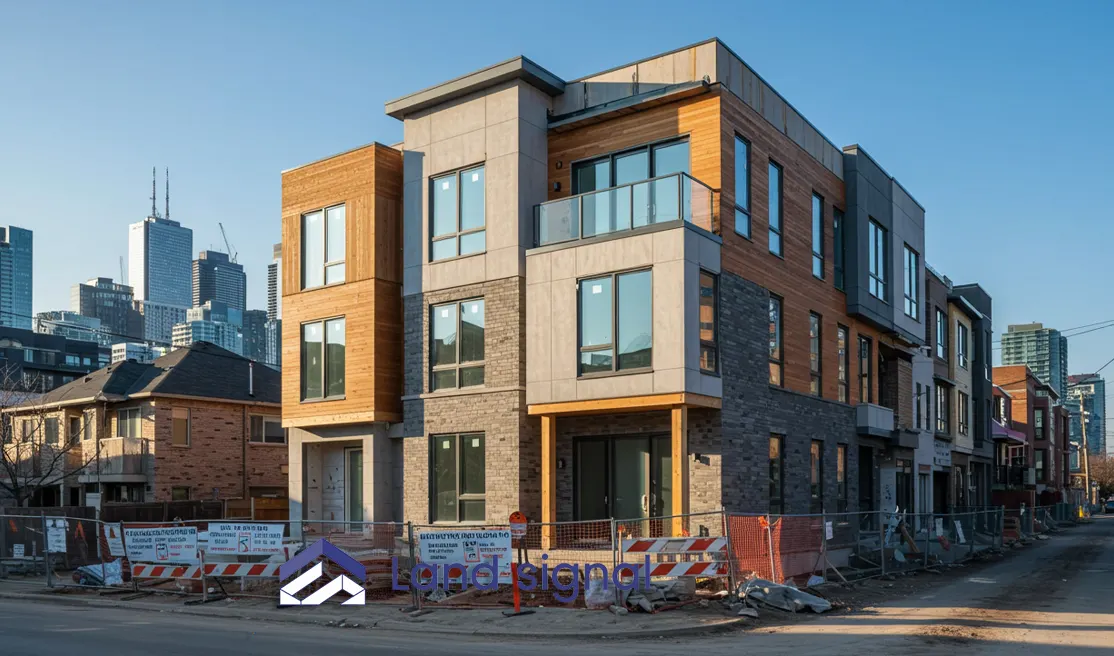
First of all, when sizing a custom home in Toronto the lot itself should be considered. Even if you have a clear idea of how much space you want, the size and shape of the property will influence what can actually be built.
These rules determine the total buildable area on the site. In some cases, the lot may allow a larger home footprint. In other cases, the design may need to go upward rather than outward.
Toronto zoning bylaws can affect:
- Maximum lot coverage
- Building height
- Setbacks from property lines
- Floor space index
- Parking or access requirements
- Landscaped open space requirements
Lot conditions matter as well. A narrow plot of land, a sloping plot, an irregular plot shape, existing trees, and servicing constraints can all influence the final size and layout of the home. Therefore, the best place to start is usually to understand what the lot can support before deciding how large the house should be. In addition, checking home building permits in Toronto gives you a clearer picture of where to add your additional space depending on your house’s condition.
Sizing Your Home for Today and Tomorrow
After considering zoning bylaws and establishing what’s actually possible to build, the right home size should also reflect how your family lives now and how your needs may change over time. A well-sized custom home supports daily life without adding space that may go unused.
Family Size and Future Needs
Think about how many people will live in the home now and whether that may change later. Some homeowners are planning for a growing family, while others want to make space for aging parents or multigenerational living. Planning for future needs reduces the chance of major renovations later.
Daily Routine
It’s also important to think about how you use space every day. For some households, that may mean one or two home offices. Others may want a gym, a playroom, a larger mudroom, or a hobby space. The goal is to size the home around real needs, not just concepts of what a custom home should be.
Optimal Space per Person
A common rule of thumb for comfortable living is around 600 to 700 square feet per person. This isn’t a strict requirement, but it can be a helpful starting point. For example, a family of four may feel comfortable in a home of roughly 2,400 to 2,800 square feet, depending on the layout and how efficiently the space is designed.
Sizing Mistakes to Avoid in a Custom Home Project
One common mistake is to plan based solely on square footage goals without giving enough thought to functionality. A larger home isn’t necessarily better if the extra space is used poorly or increases costs without improving daily life.
Another mistake is assuming that every room in a custom home should be larger. In reality, some spaces only need to be efficient, while others would benefit more from additional size. Achieving the right balance depends on the family’s lifestyle.
Other common mistakes include:
- Overbuilding for the lot
- Underestimating zoning and bylaw limits
- Adding rooms that are rarely used
- Ignoring future family needs
- Focusing too much on size and not enough on layout
- Forgetting about storage, circulation, and utility spaces
How to Make Better Home Sizing Decisions
There are a few practical ways to make the sizing process easier and more accurate when planning a custom home.
- Measure Your Current Space: One of the best starting points is to measure the rooms in your current home. This can help you figure out what already works well and where you want more space. This is useful information when deciding what to keep, increase, or reduce in the new design.
- Focus on Layout: A smaller, better-designed home can often feel larger than a bigger home with a poor layout. Good circulation, natural light, storage planning, and room proportions can make a major difference in how spacious a home feels.
- Consider a Finished Basement: A finished basement can be one of the best ways to add practical living space without a second floor addition in Toronto. This can be an especially smart option on lots where bylaw limits make above-ground expansion more difficult.
- Basements can be used for:
- Guest rooms
- Recreation rooms
- Home offices
- Gyms
- Storage
Space for extended family
How Land Signal Supports Custom Home Sizing and Planning in Toronto
Choosing the right size for a custom home is not only about maximizing square footage. It also involves understanding what your lot can support, how zoning bylaws affect buildable areas, and how your home design will serve your family’s needs over time. Land Signal helps homeowners navigate these decisions by supporting:
- Zoning and land use analysis to assess how Toronto bylaws, lot dimensions, setbacks, height limits, and other development standards affect the size and layout of your custom home
- Guidance on permit and planning requirements for custom home projects, helping you understand how proposed floor area, building form, and site conditions relate to approvals and compliance
- Coordination with architects, designers, and consultants to help create practical, buildable plans that balance square footage goals with layout efficiency, lot constraints, and long-term livability
- Support with early planning decisions that affect home size and usability, such as room allocation, circulation, storage, basement potential, and how to plan for future family needs
- Guidance on design efficiency and project feasibility, helping you avoid common sizing mistakes such as overbuilding for the lot, adding underused space, or prioritizing size over function and comfort
Whether you’re planning a modest custom home, refining your layout to make better use of space, or designing a larger home around future family needs, Land Signal helps simplify the planning process and move your project forward with greater clarity and confidence.
Contact our team today for expert guidance and a smoother path from lot potential to approved custom home plans.
Conclusion
When it comes to choosing the right size for your custom home in Toronto, it’s important to consider more than just maximising the amount of space. The best results come from balancing lot conditions, zoning rules, family needs and smart design choices.
A well-sized home should fit your property, support your current and future lifestyle, and remain practical. By carefully considering functionality, layout and long-term requirements, you can design a custom home that feels comfortable and efficient and is well suited to life in Toronto.
FAQ
No, 2,000 square feet is generally considered a medium-sized or average home, not a small one. While it is slightly below the 2025 US median for new single-family homes (approx. 2,200–2,300 sq ft), it comfortably fits 3-4 bedrooms and 2.5–3 bathrooms, offering ample space for most families.
You must apply for a minor variance through the Committee of Adjustment (COA). This process can add months to your timeline and requires a strong planning rationale to be approved.
Generally, basements are considered “free” space and do not count toward your Gross Floor Area (GFA) or FSI. However, if your lot is steeply sloped, the city may count a portion of the basement toward your limit.
Sources
- Yager Construction. (2024). Tips for Choosing the Size and Features of Your New Custom Home — A practical guide to planning custom home size and features based on budget, lot constraints, lifestyle needs, and long-term functionality. Retrieved from https://www.yagerconstruction.ca/blog/tips-for-choosing-the-size-and-features-of-your-custom-home/
- KRM Custom Homes. (2024). Our Guide to Right-Sizing Your Home — A homeowner-focused article on choosing the right home size by weighing family needs, future lifestyle changes, and how each space will actually be used. Retrieved from https://krmcustomhomes.com/blog/choosing-right-custom-home-size/
- Xavieras Custom Homes. (2025). How to Choose the Right Size for Your Custom Home in Toronto — A Toronto-specific guide to right-sizing a custom home, with discussion of square footage per person, lot constraints, FSI, layout efficiency, and budget planning. Retrieved from https://xavieras.ca/average-custom-home-size-toronto/